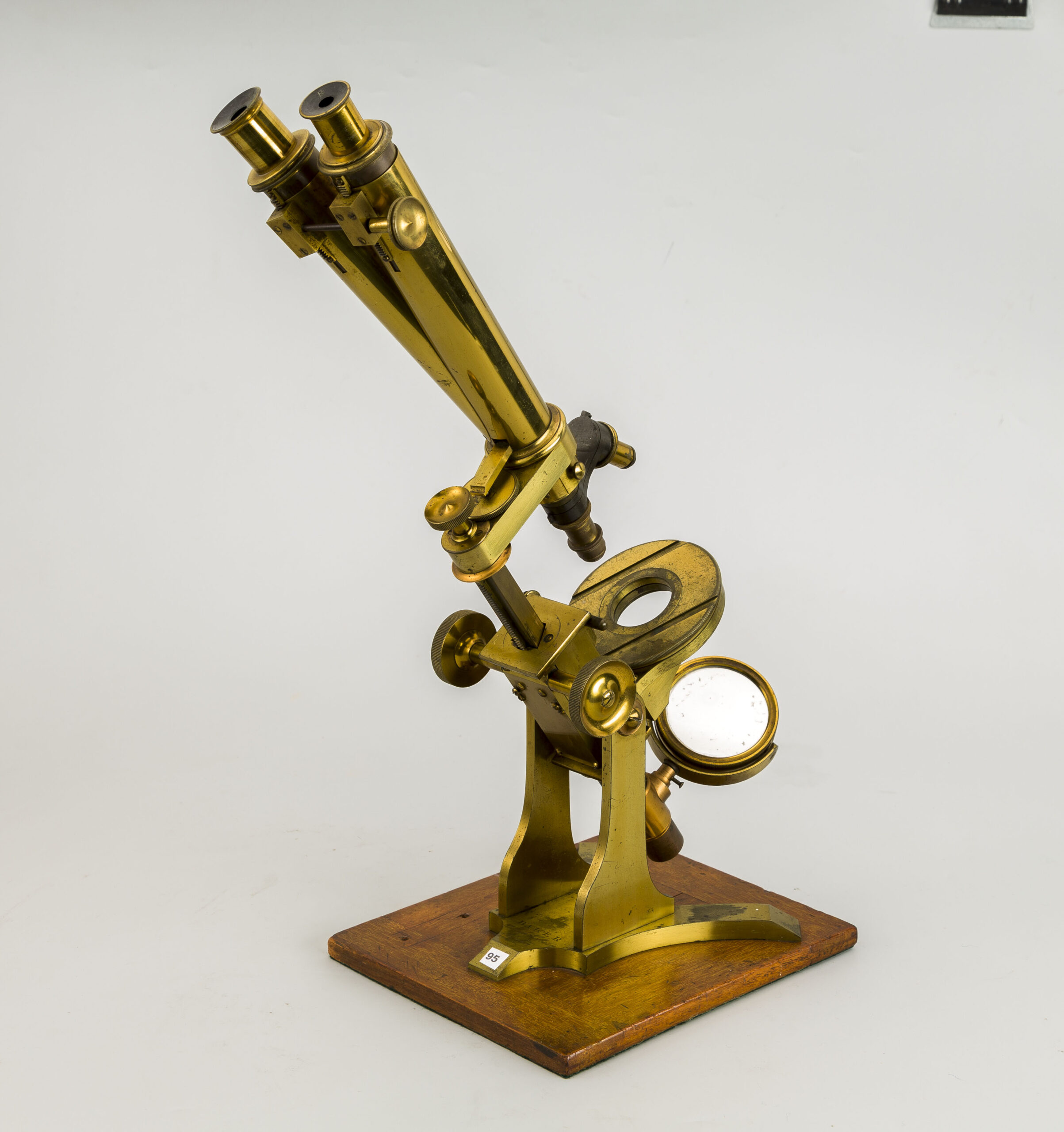
Binocular microscopes
The basic characteristic that defines it is that it has two eyepieces. With this configuration the sample can be observed with both eyes simultaneously. Compared to monocular microscopes, this type of microscope generally reduces eye strain since it is not necessary to keep one eye closed to observe the sample. This feature makes them more suitable for working for long periods of time.
Nº1.Wenham prism operation diagram in the duplication of the rays of the image captured from the objective. (Images taken from Wikipedia).
The configuration of a binocular microscope is internally very similar to that of a monocular microscope. The only difference is the presence of a prism that divides the light coming from the objective into two exactly equal beams towards the two eyepieces. Fig. 1. The objectives of binocular microscopes usually magnify between 4x and 100x while the eyepiece usually has a magnification of 10x or 20x. Therefore, the total magnification of binocular microscopes is usually between 40x and 1500x.
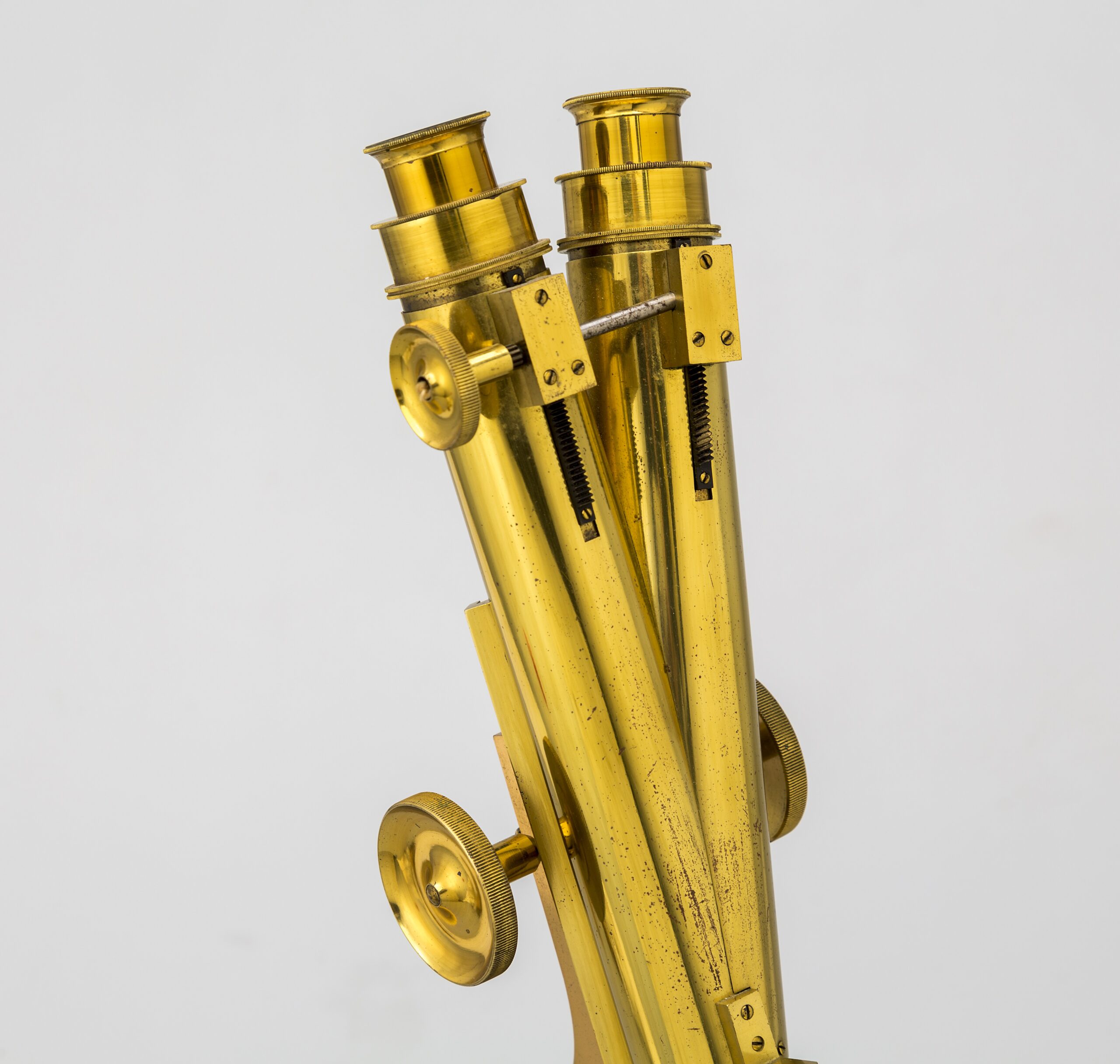
Binocular microscopes allow the distance between the two eyepieces to be adjusted to adapt it to the interpupillary distance of the observer. Fig. 2. In good quality binocular microscopes, the eyepieces can be individually adjusted to correct the observer’s eye defects and correctly focus the image of both eyes.
No. 2. Image of the B&B binocular microscope No. 91 of this collection. It shows the approach system of the optical tubes to adapt to the interpupillary distance of the observer.
History of the binocular microscope
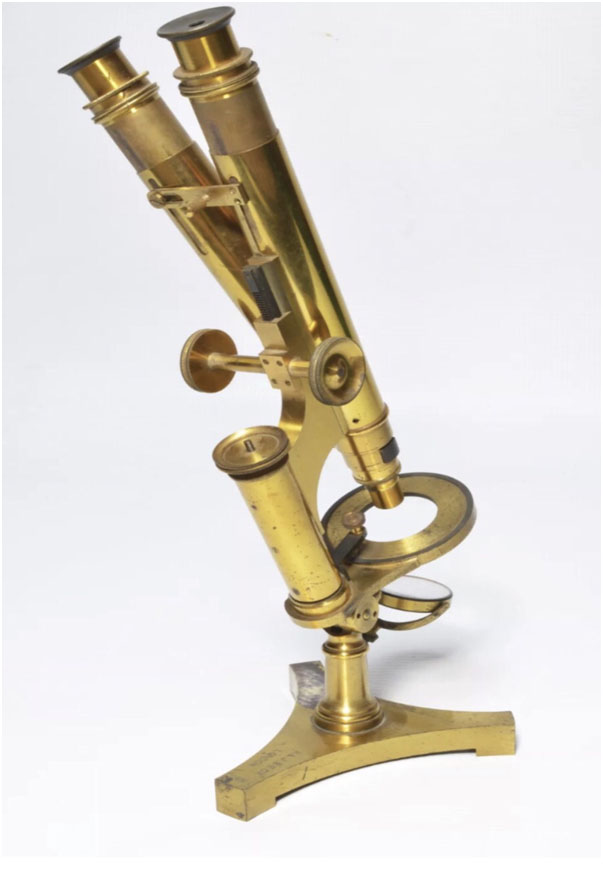
17. Binocular modelo Popular. Beck & Beck. 1870. Londres.
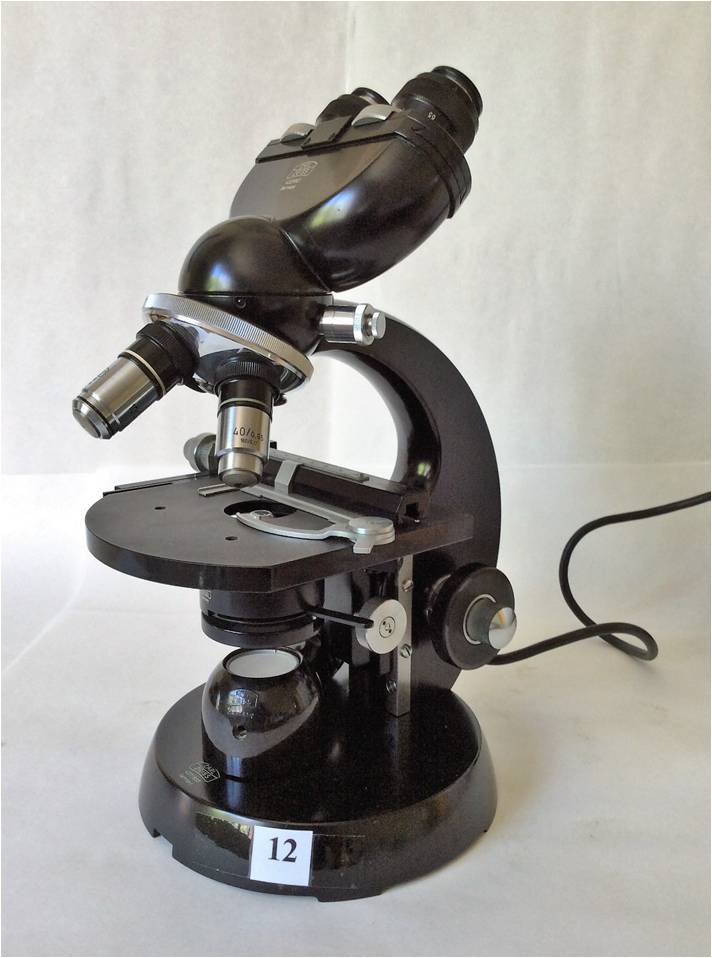
24b. Microscopio binocular Zeiss. Modelo Max. Alemania 1950.
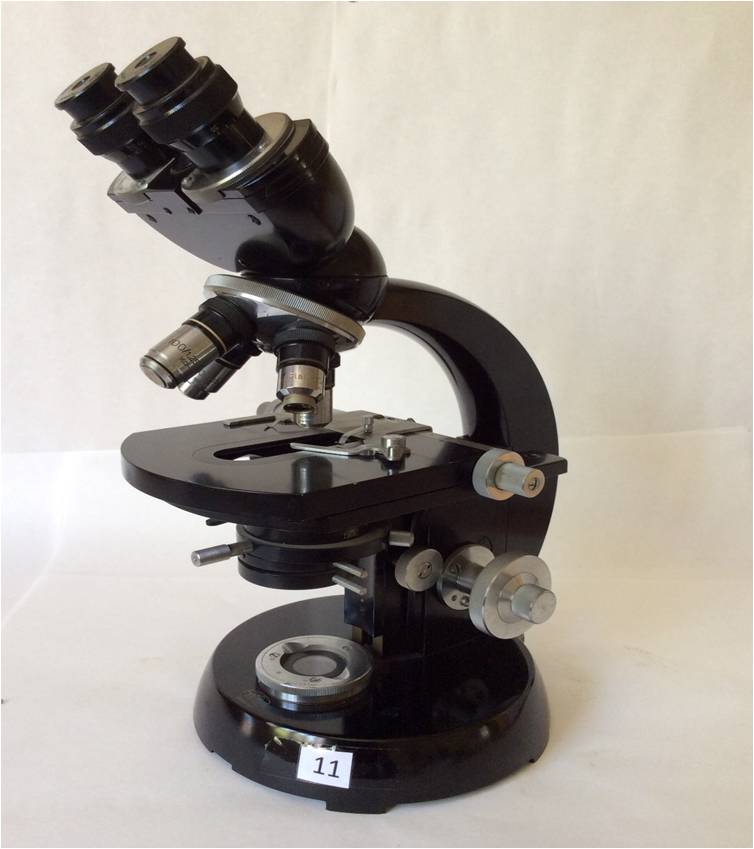
24c. Microscopio binocular Zeiss. Alemania 1960.
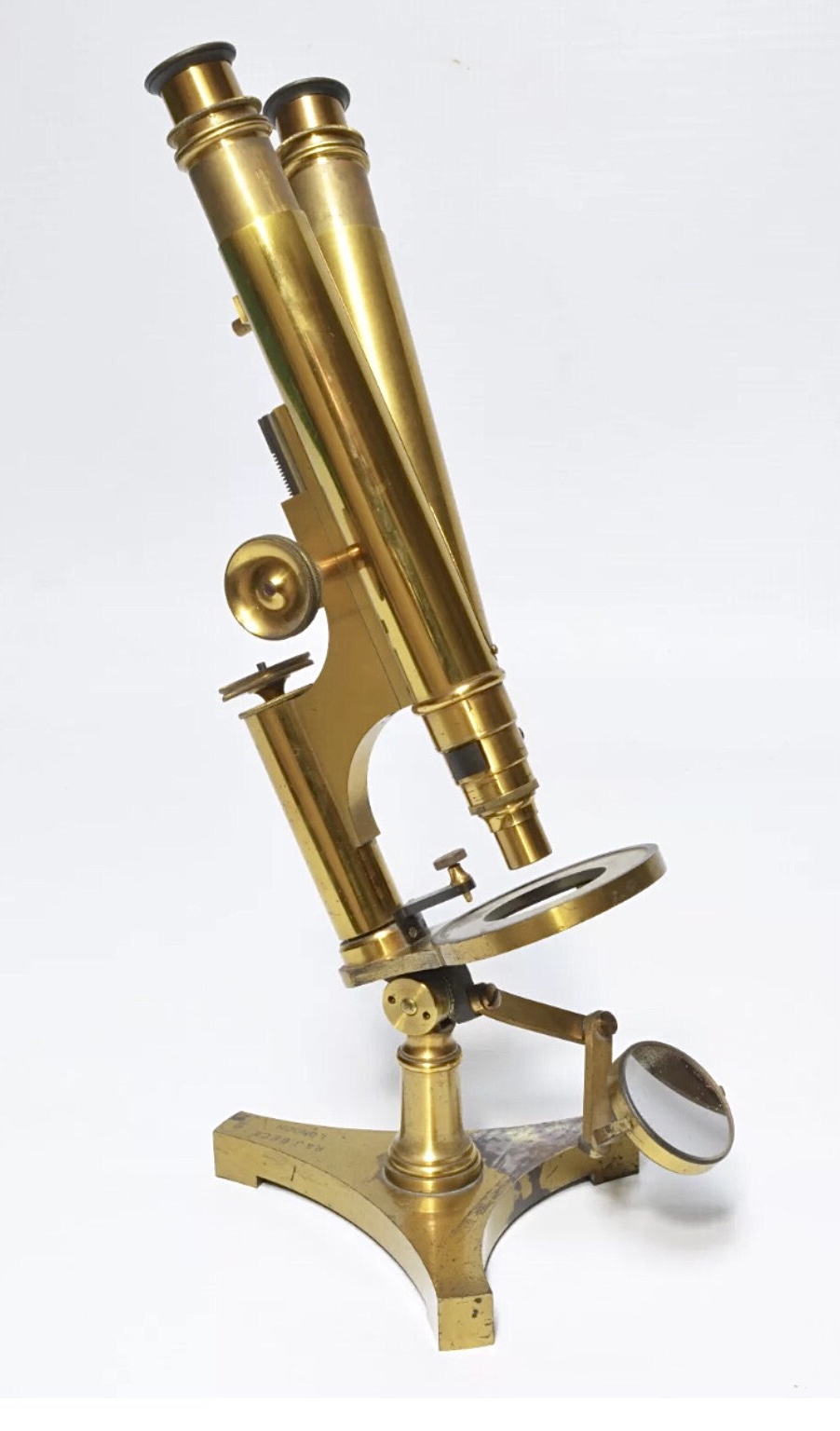
91a. Microscopio binocular R&J Beck. Londres c.1880
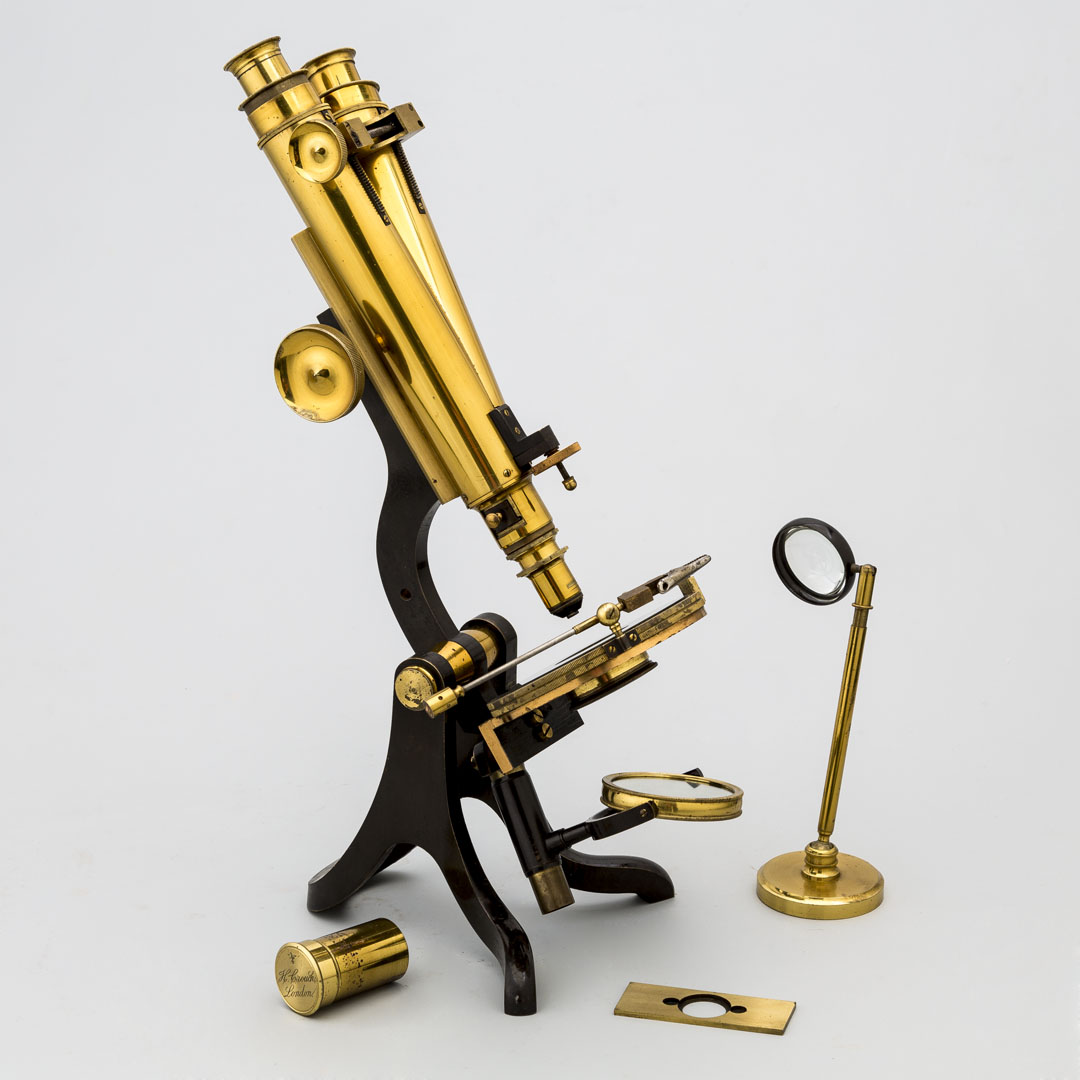
92. Microscopio Binocular “Crouch Premium”. Henry Crouch. Londres. 1870
93. Microscopio binocular para estudiantes. Henry Crouch. Londres. 1880
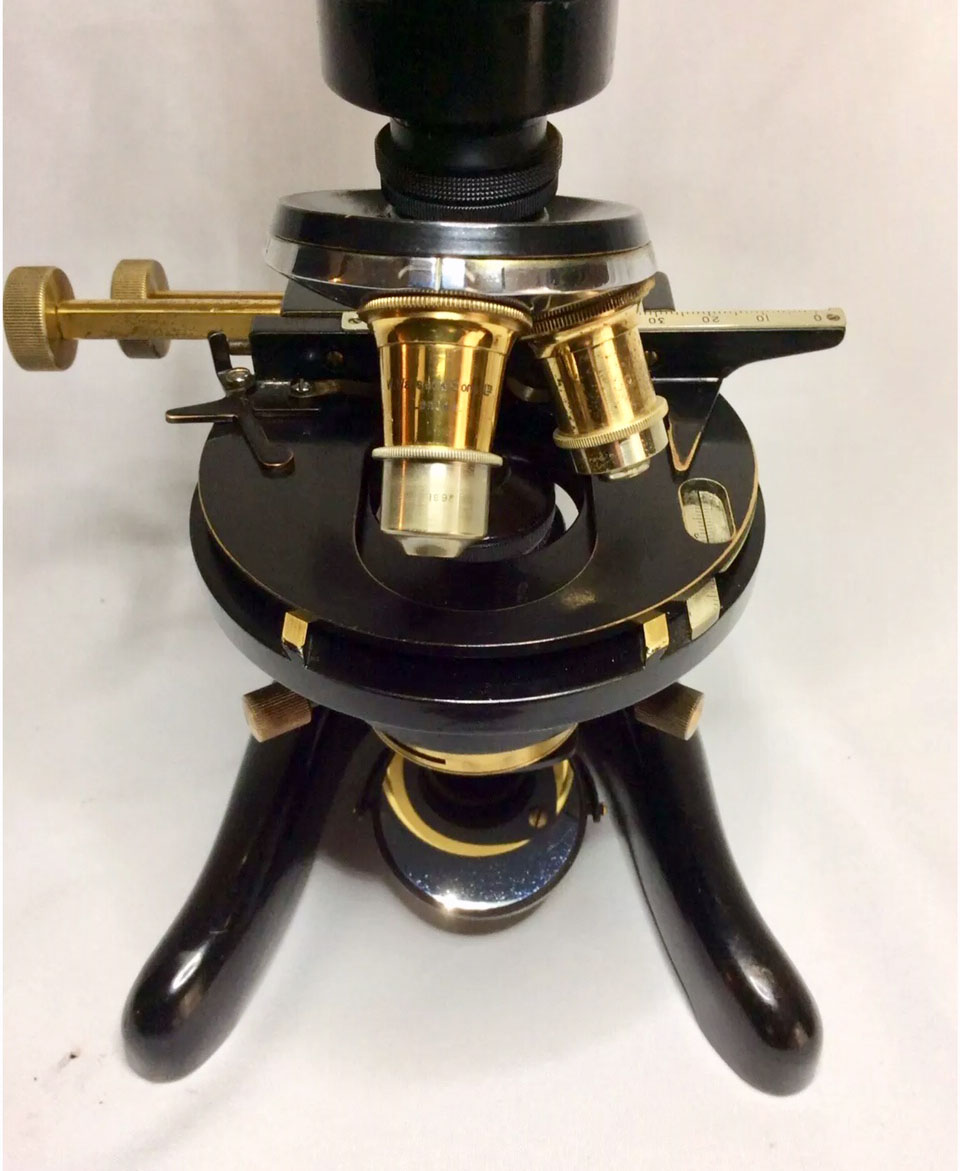
94. Microscopio mono y binocular de alta resolución. Watson & sons. 1937