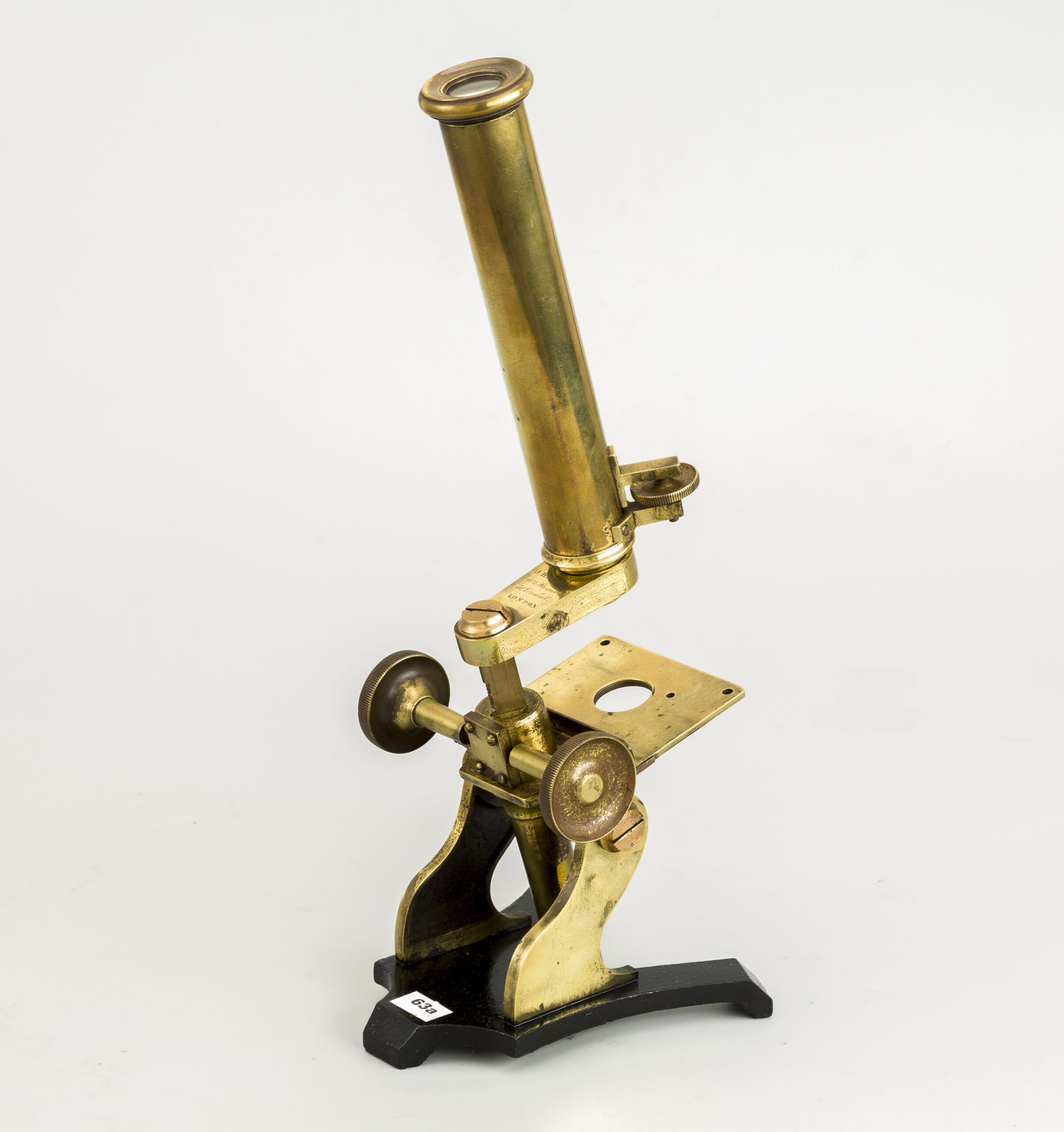
Manufactured from 1730 to 1850
THE BIRTH OF MICROSCOPY.
Manufacturers in England were instrumental in the development of microscopy, from the early 18th century to the 20th century. This activity begins in the early 1700s, when Culpeper designs the model that will be named after him and that will persist for decades. From 1750 to 1900 there was feverish activity in the design and manufacture of optical devices throughout England, especially in London, Birmingham, Manchester and Edinburgh. In general, they are manufactured in small family workshops that have a short active life, since their activity ceases with the disappearance of their founders or lasts for one or two generations. They usually manufacture a limited number of models, other times they only manufacture the mechanical part of the apparatus and acquire optics from major manufacturers, especially Leitz, which has developed the Abbe condenser and achromatic optics. Finally, other companies are simple distributors who acquire the devices already manufactured and in which they incorporate their name. This explains the endless list of manufacturers found today by those who enter this world of English microscopes.
Social impact of the microscope.
After a period of initial confusion about the meaning and possible usefulness of these new devices, which allow us to visualize a microscopic world. Some consider that these devices support the idea of the creation of the world by God, others nevertheless consider that the microscope is only a frivolous diversion. The publications of Lewenhoeck in London and Malpighi in Italy aroused the enthusiasm of a large public. This enthusiasm was reinforced by lectures and practical demonstrations from some manufacturers such as Martin and Cuff in England. But some showed a skeptical, if not hostile, attitude, coming to denounce these demonstrations with the solar microscope.
Hernry Baker (1698-1774) is the one who first proposed in England the use of the microscope for scientific studies in his work «The Microscope Made Easy» continued in 1753 with the publication of a second «Employment for the Microscope». Andrew Ross, working with Joseph J. Lister from 1837 to 1841, introduced a series of improvements in the design of the microscope to transform it from a toy or a parlor oddity into an important scientific tool.
Por otro lado, los cambios sociales y el aumento del nivel de vida incidieron en la aparición de clases medias con mayor poder adquisitivo y, sobre todo, con tiempo libre para emplearlo en actividades de entretenimiento. Es el momento de la aparición de una población de curiosos que se ponen en contacto con los científicos para satisfacer sus inquietudes de adquisición de conocimientos. Los amantes de la microscopia se organizan en clubs de debate, en los que discuten los hallazgos conseguidos estudiando la naturaleza. Sus miembros se transforman en coleccionistas de preparaciones.
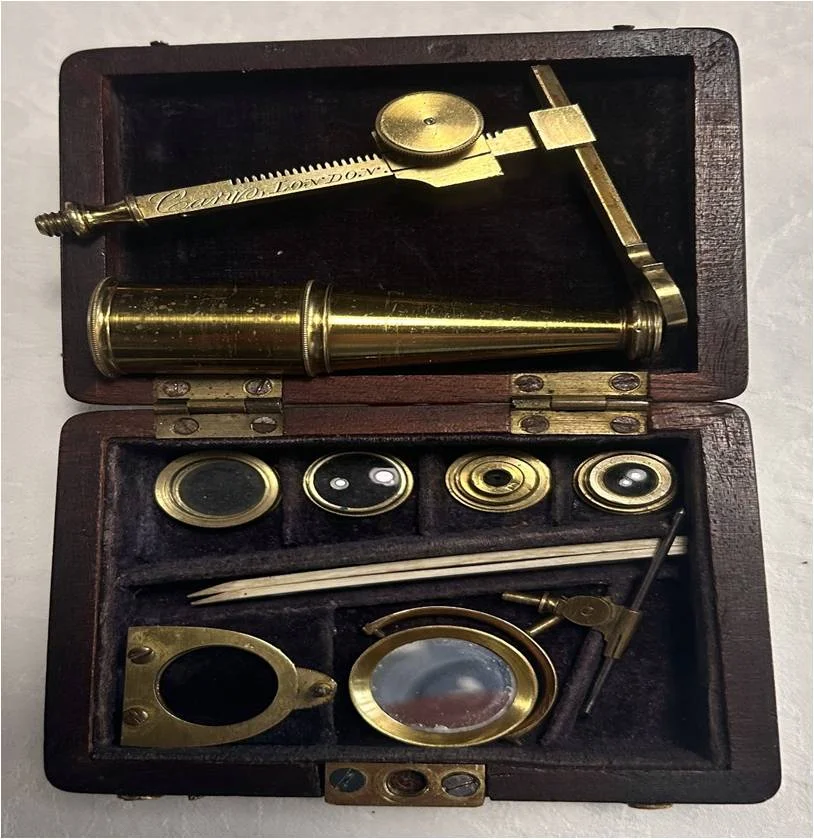
25. Microscopio de bolsillo. Cary-Gould. Londres. 1829.
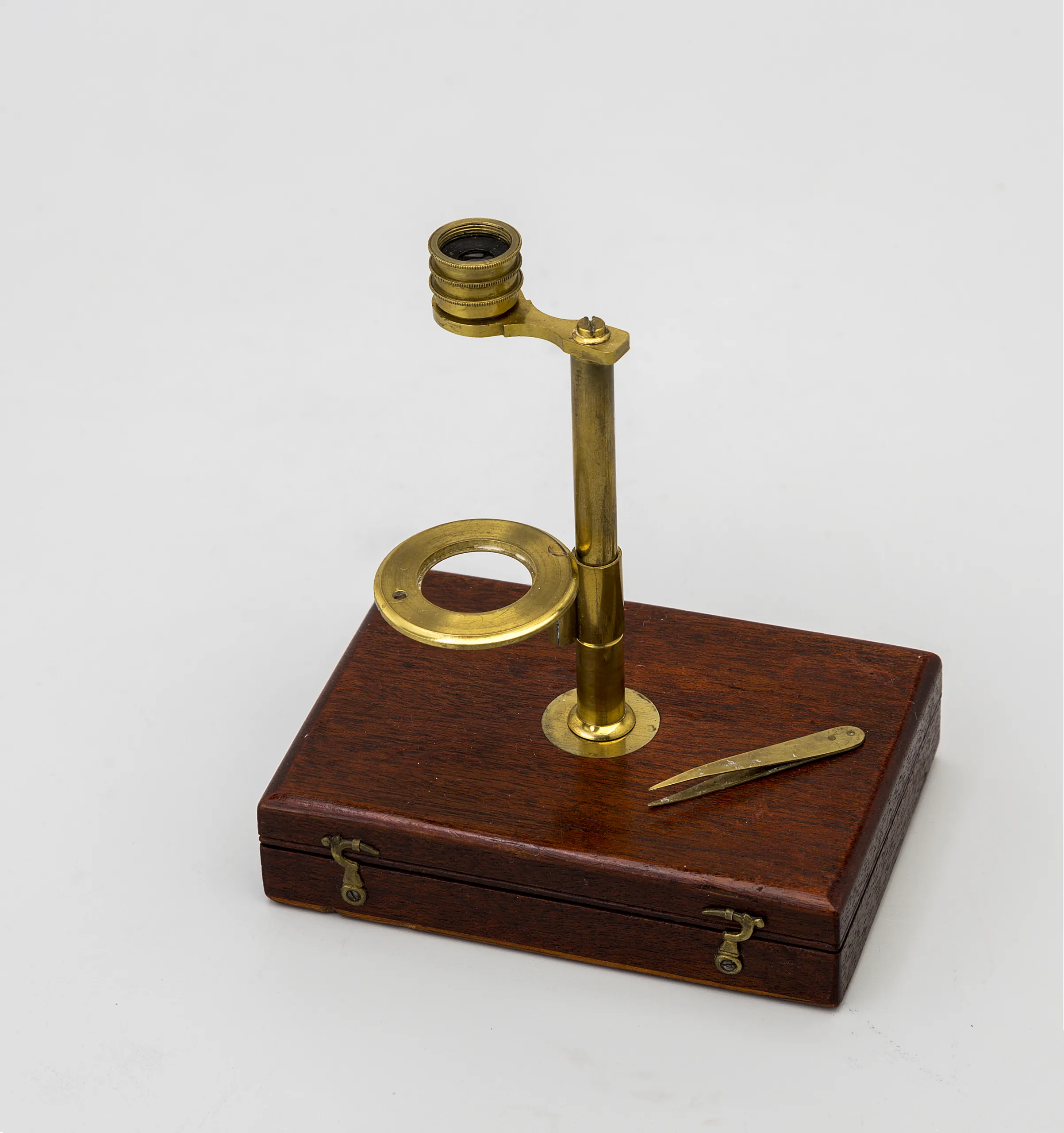
25a. Microscopio portátil de “caja”. Tipo Cary-Gould o Ellis c.1830.
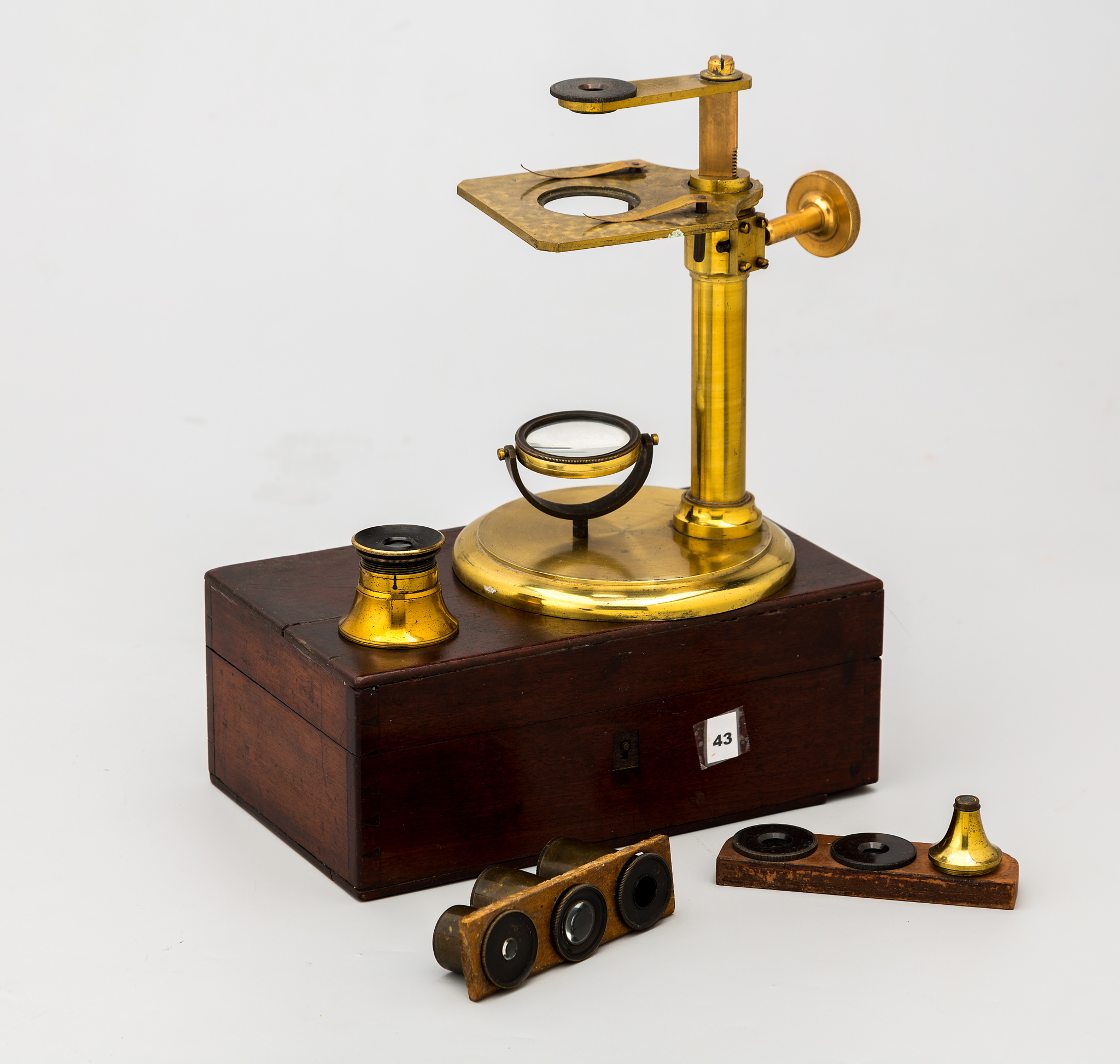
25b. Microscopio portátil tipo Ellis. 1775
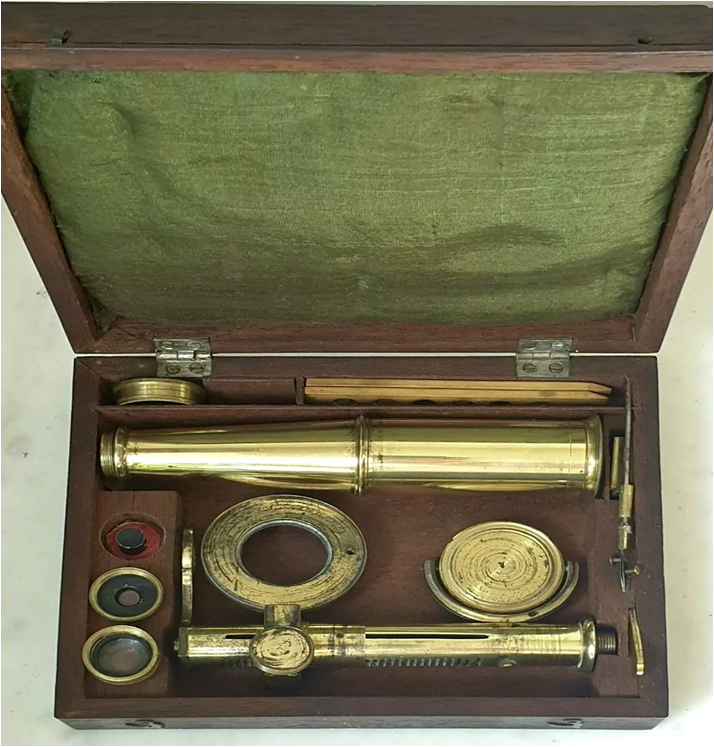
25c.Microscopio tipo Cary. Gardner. Belfast. c.1809.
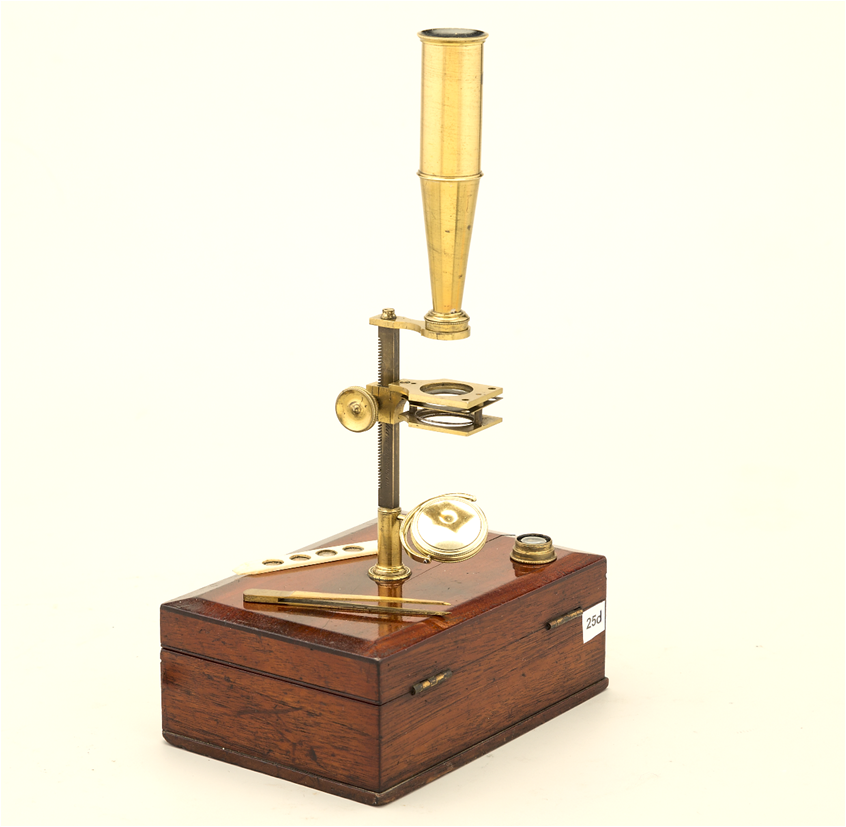
25d. Microscopio tipo Cary-Gould. Abraham & Co. Liverpool. c.1820.
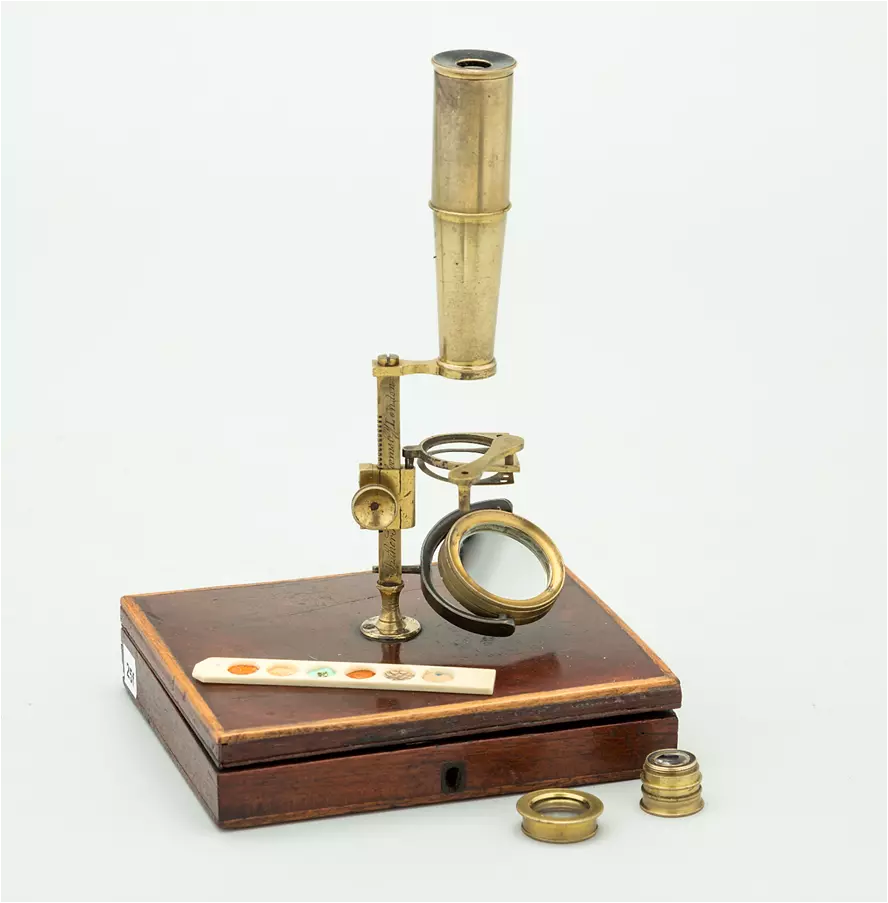
25f. Microscopio modelo Cary-Gould. J. Tuther. Londres. 1820.
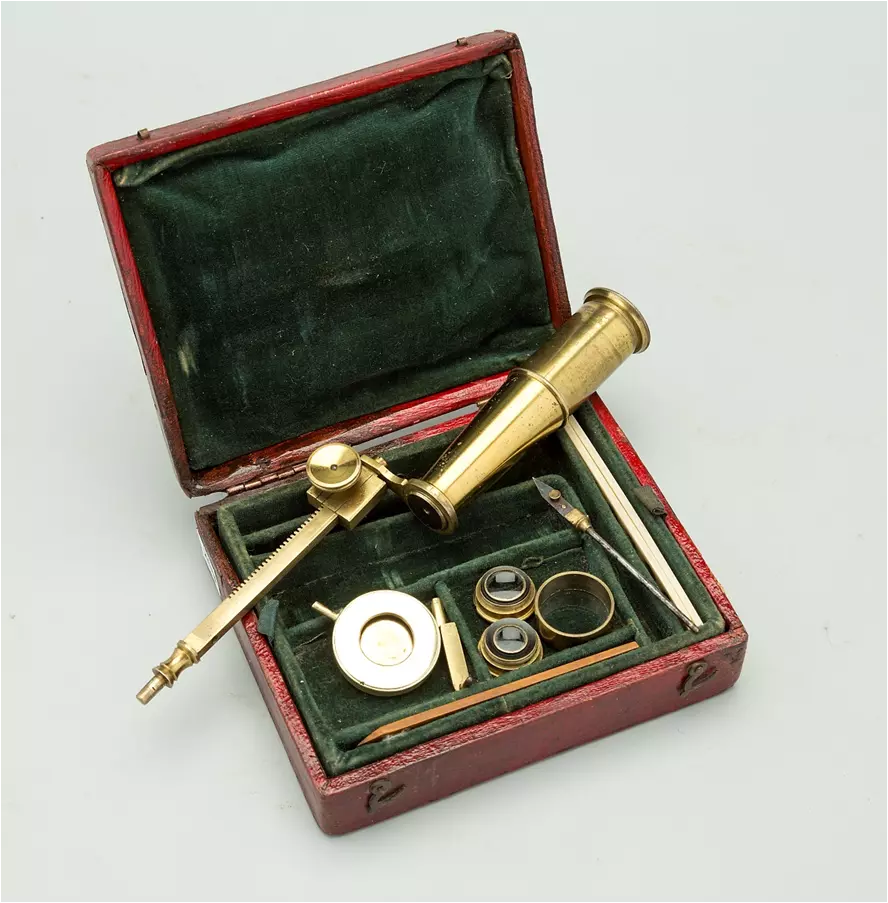
25g. Microscopio portátil Cary-Gould. Inglaterra. c.1840.
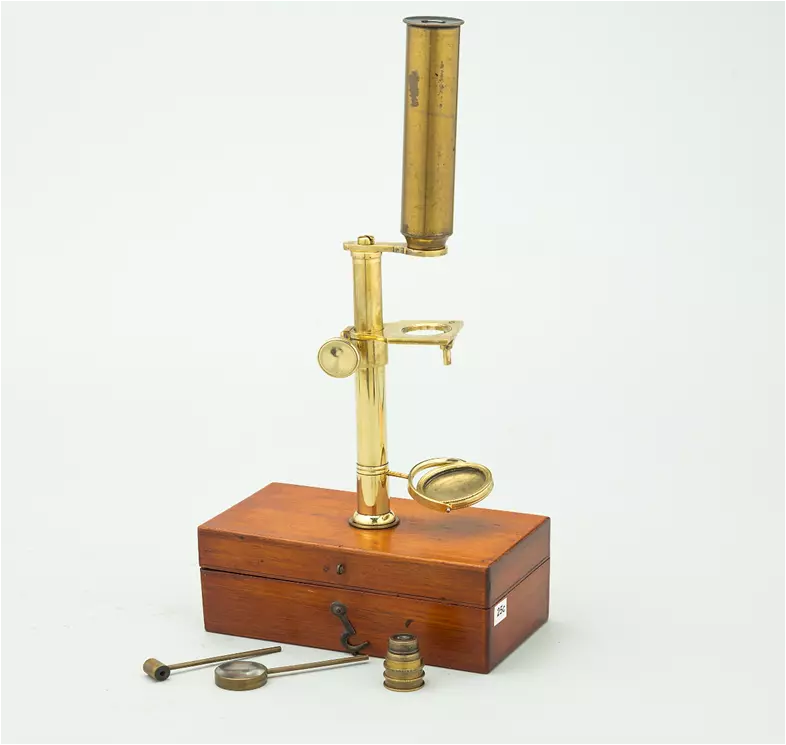
25h. Microscopio Cary-Gould. Inglaterra. c.1840.
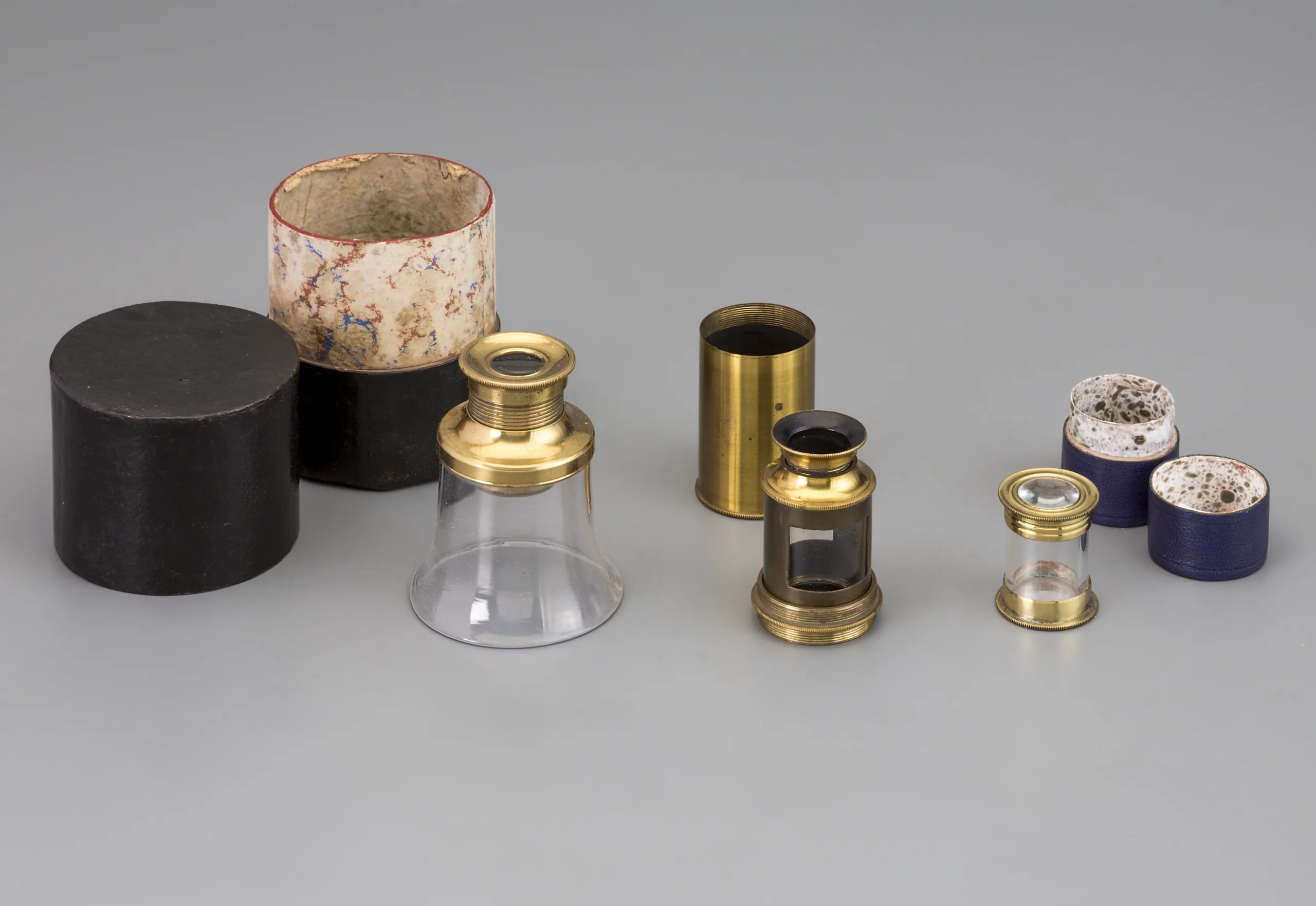
31c. Campana “live box”. Inglaterra c.1780.
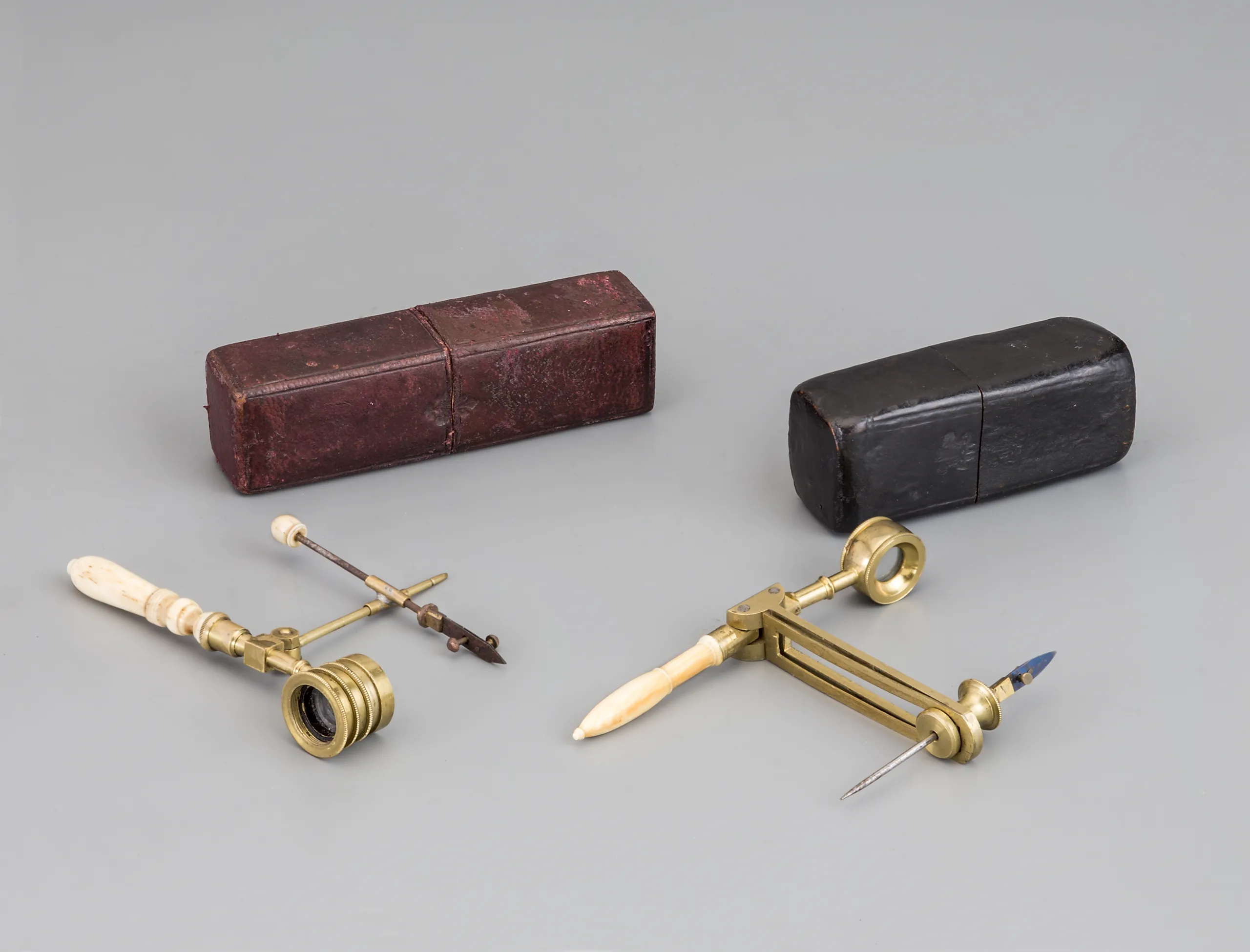
32a. Lupa portátil. W.S. Jones. Londres. c.1789
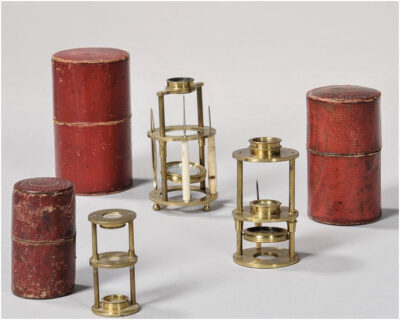
34a. Pequeño microscopio portátil Whitering. c.1800.
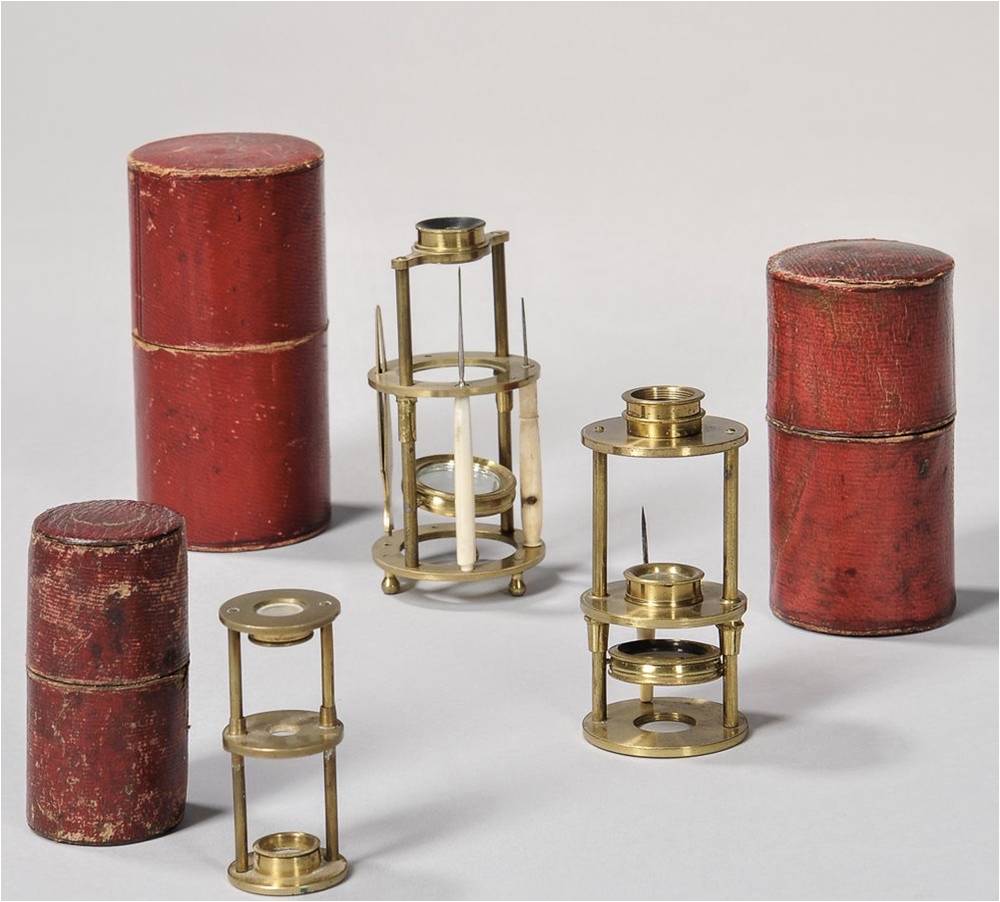
34b. Pequeño microscopio portátil William Whitering. c.1800.
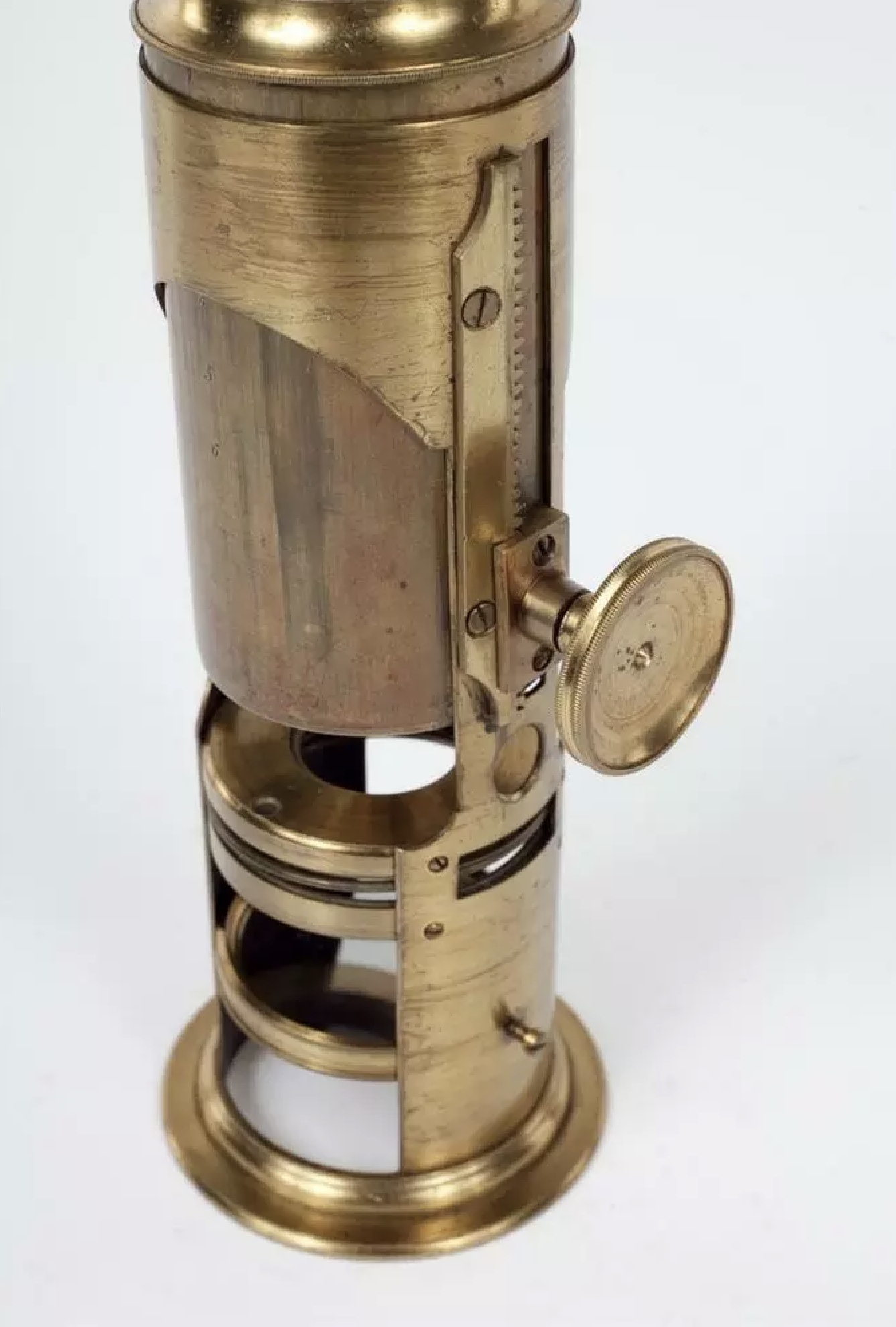
42. Microscopio de barril (drum). Lennie. Edimburgo. c.1857
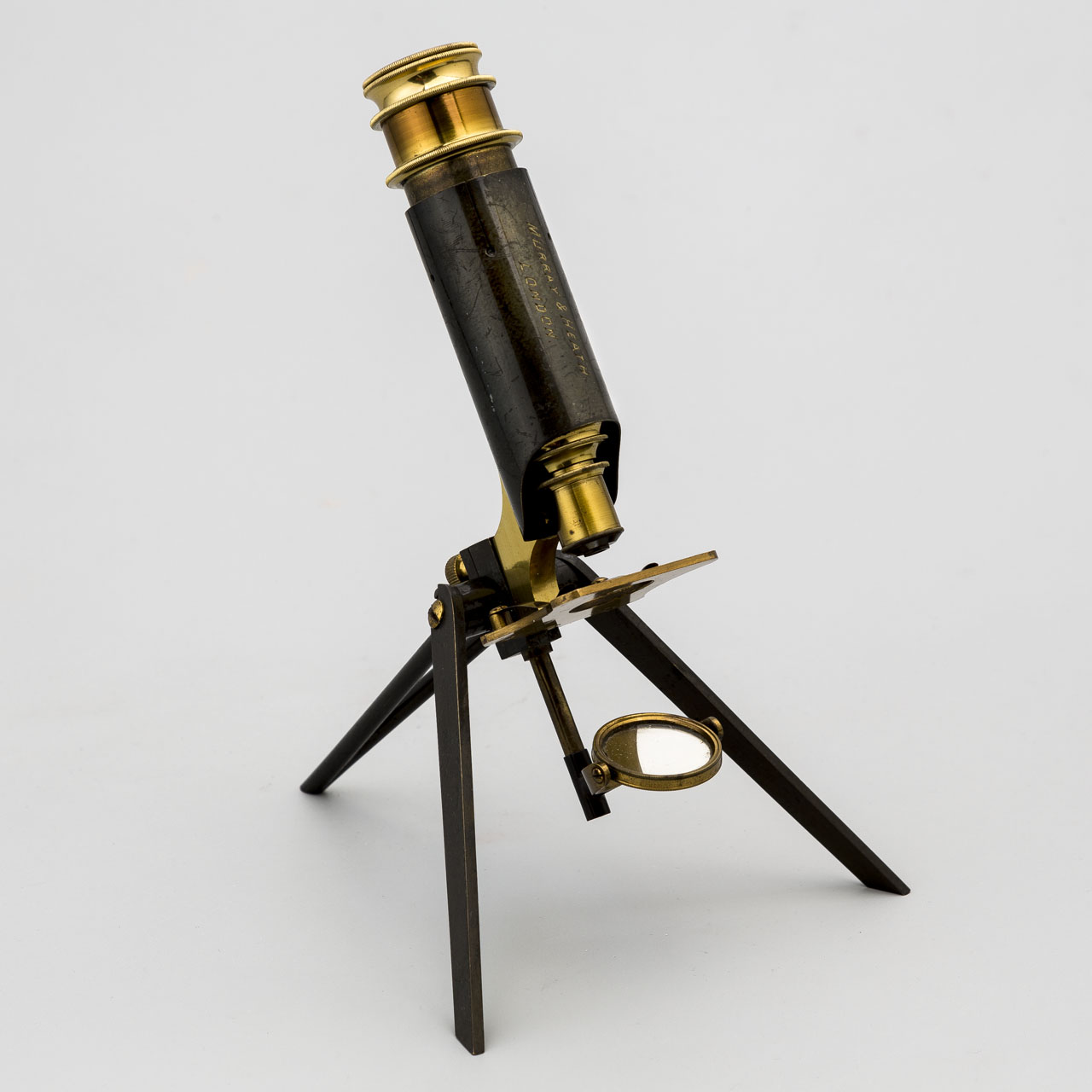
43. Microscopio plegable portátil. Murray & Heath. Londres. 1860
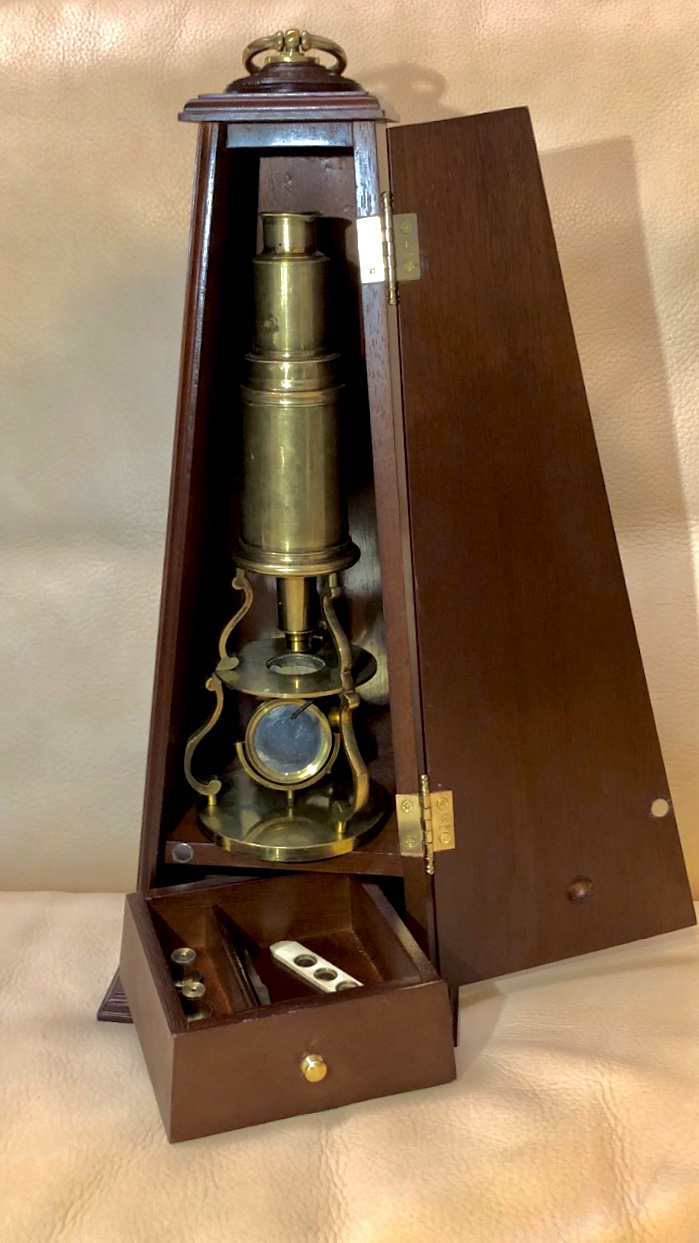
45. Microscopio Culpeper. Inglaterra. 1740
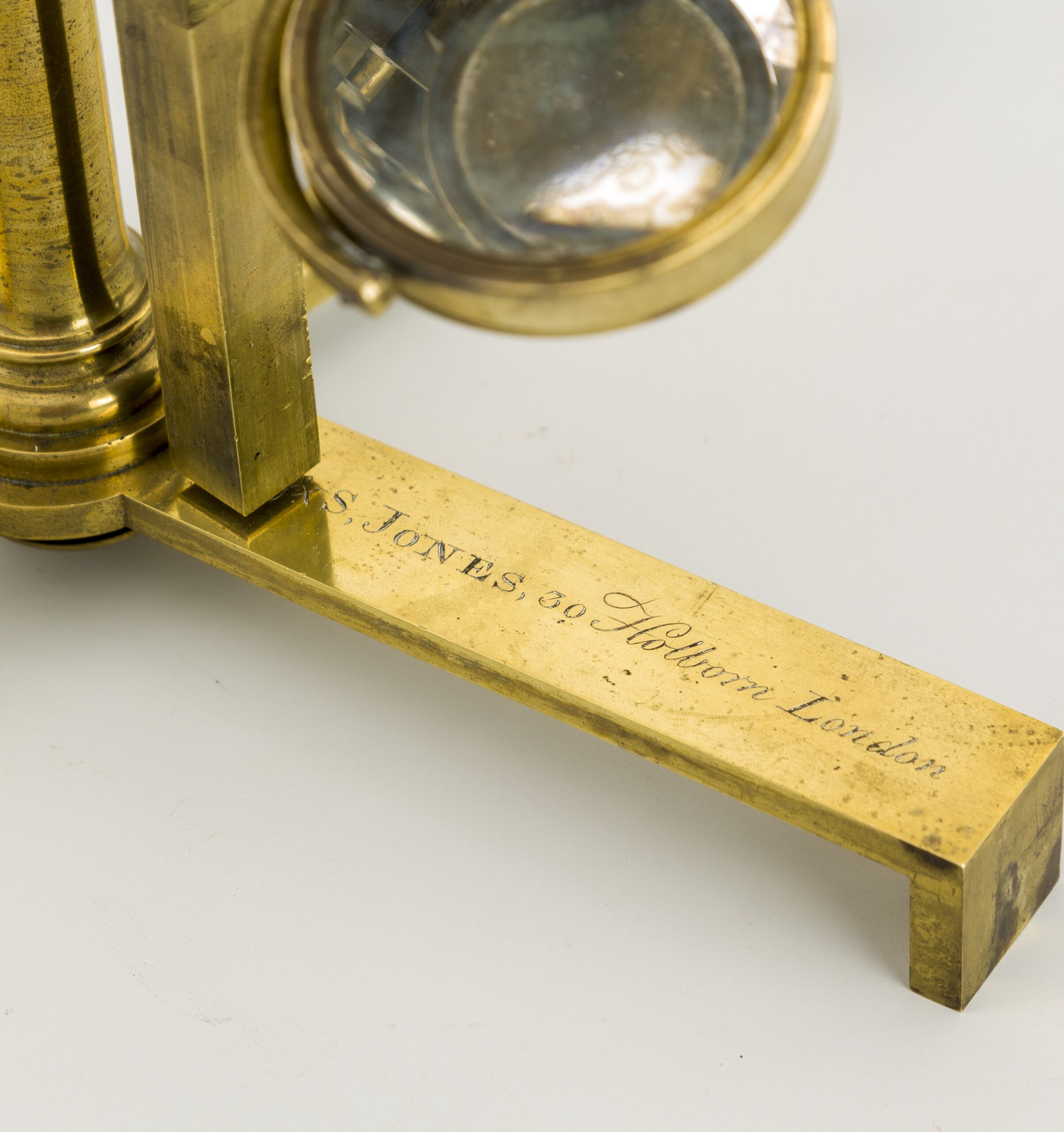
45a. Microscopio mejorado (most-improved) de W & S JONES. Londres c.1798.
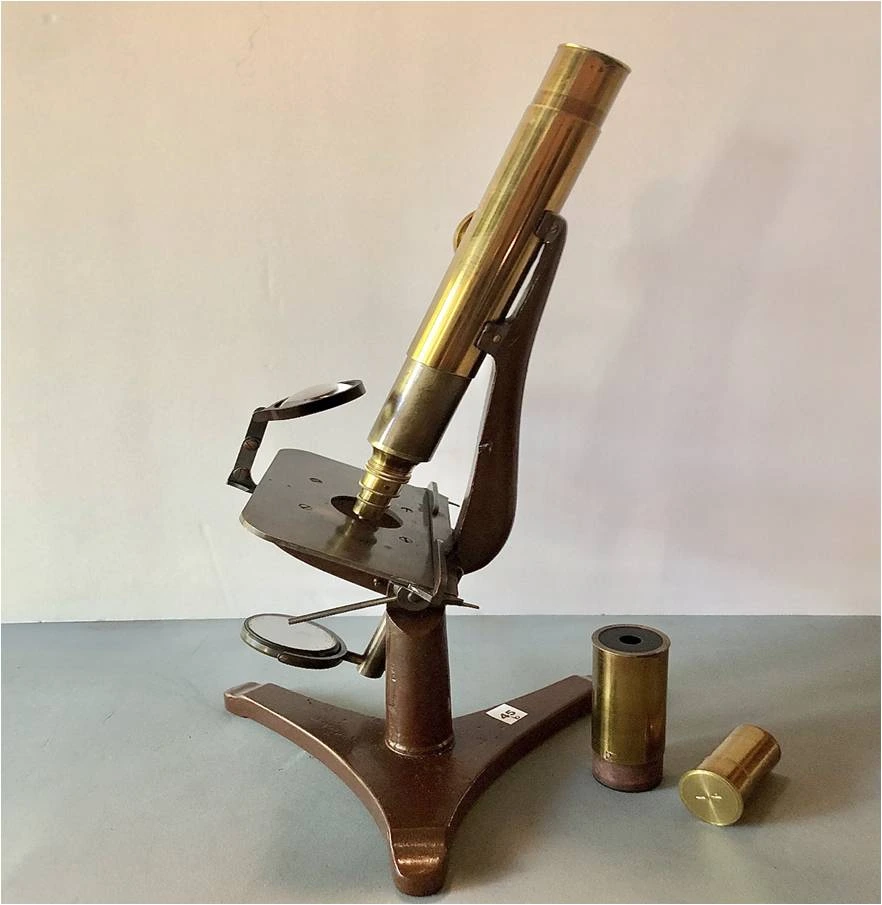
45b. Microscopio para estudiantes. Lealand & Powell.1841. Londres
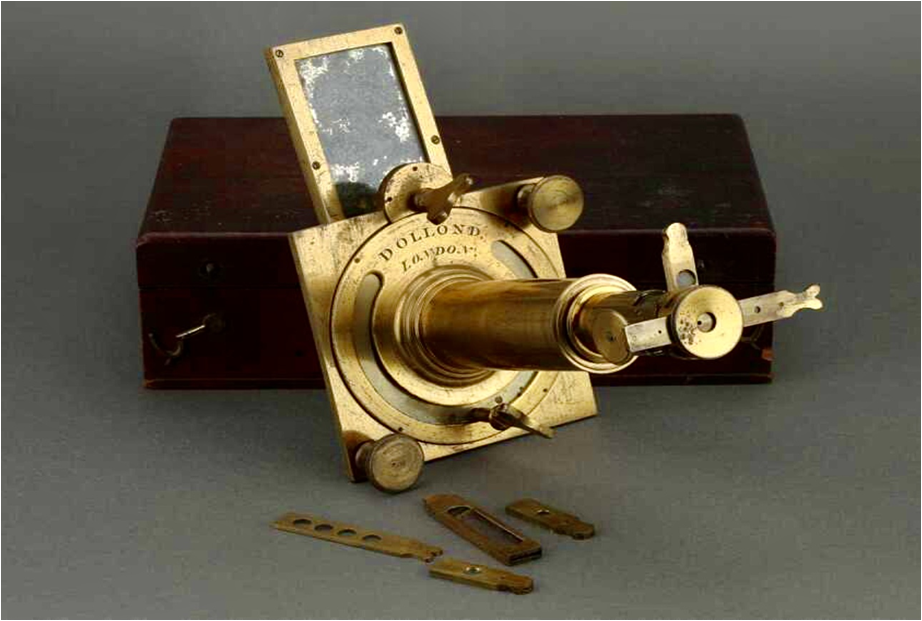
45d. Microscopio Solar. Dollond. Londres. c.1780.
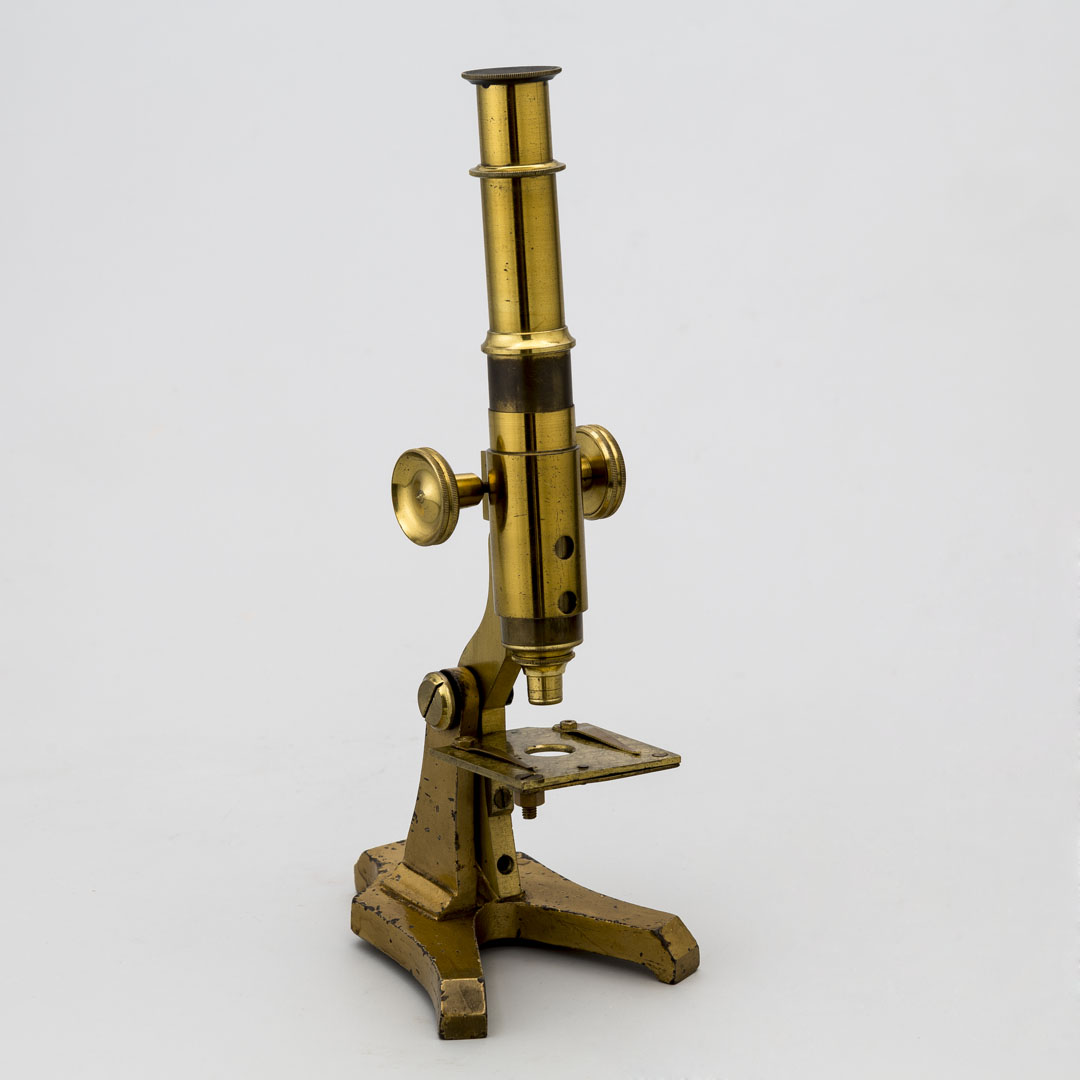
46. Microscopio monocular simple de fabricante desconocido.1830
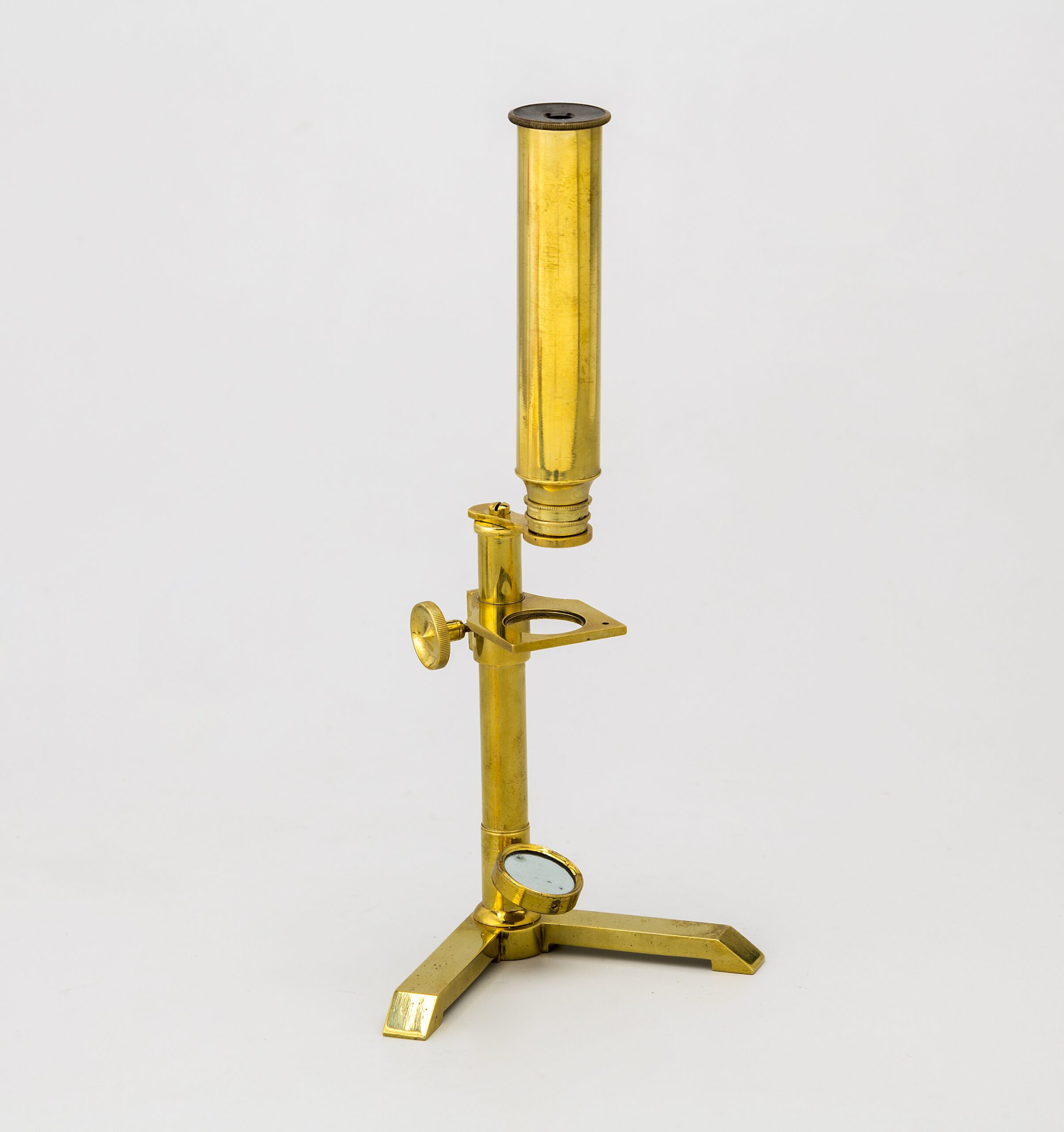
46a. Microscopio monocular simple. c.1780. Fabricante desconocido.
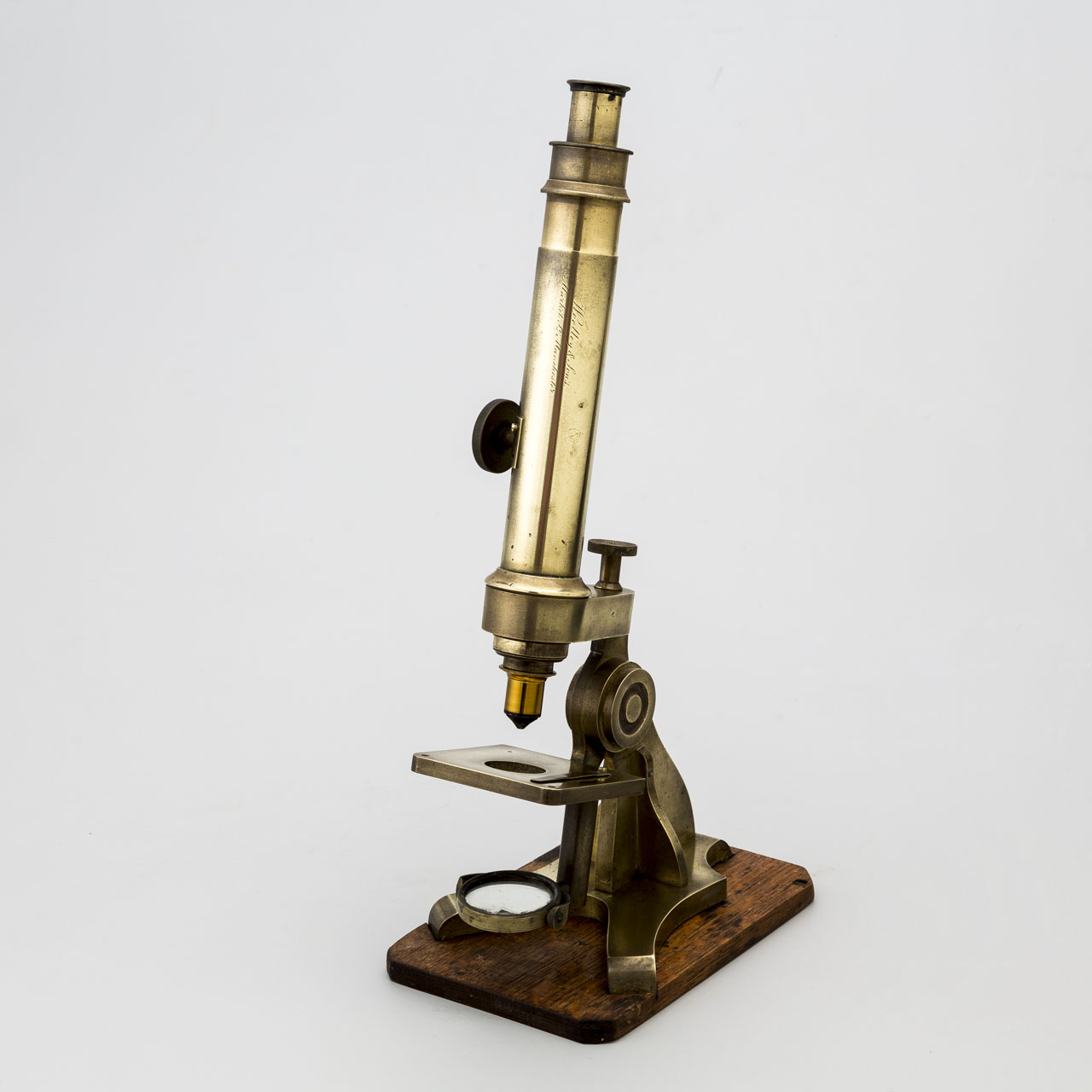
47. Gran microscopio monocular James Woolley & sons.1860. Manchester
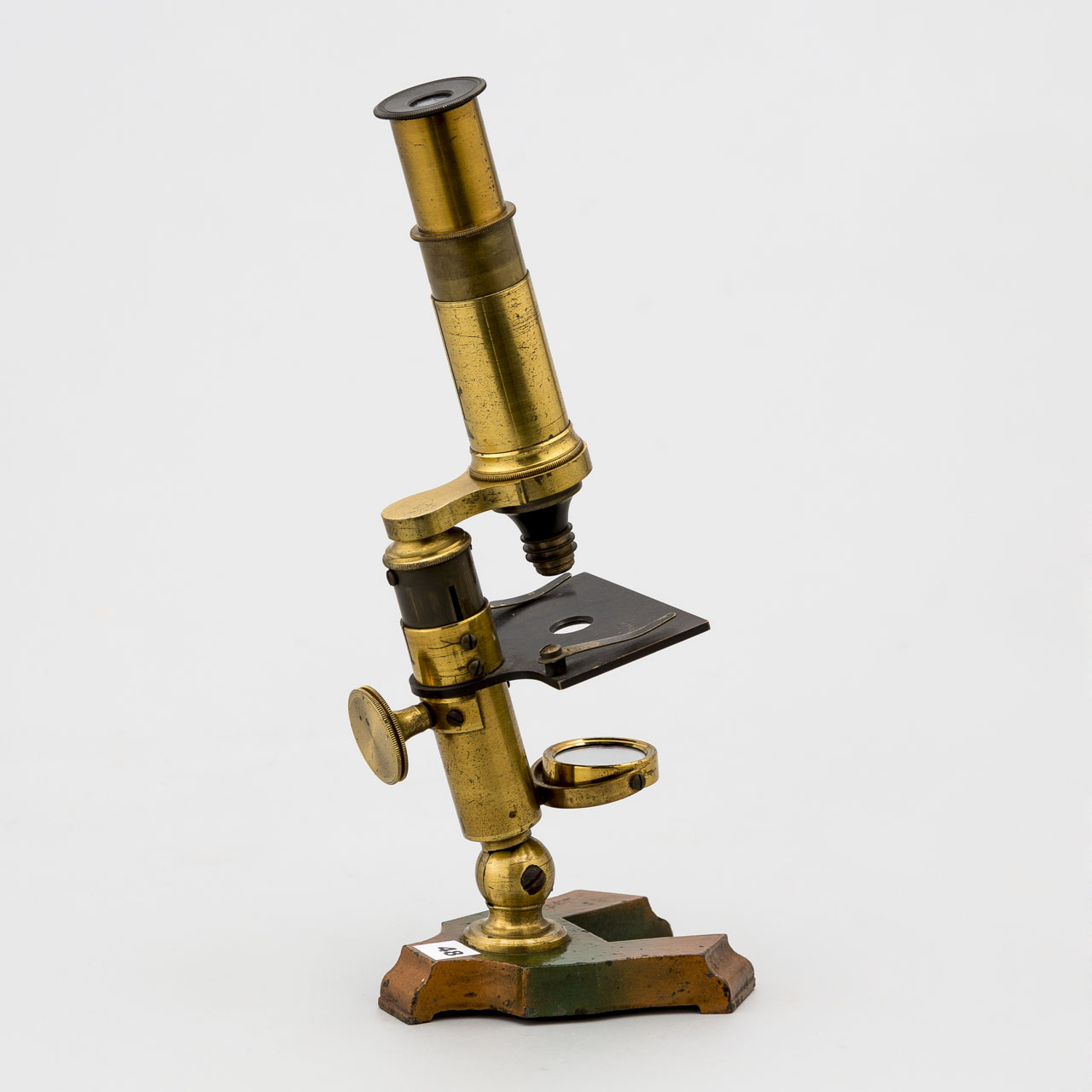
48. Pequeño microscopio monocular. 1860. Fabricado por Bailey. Birmingham.
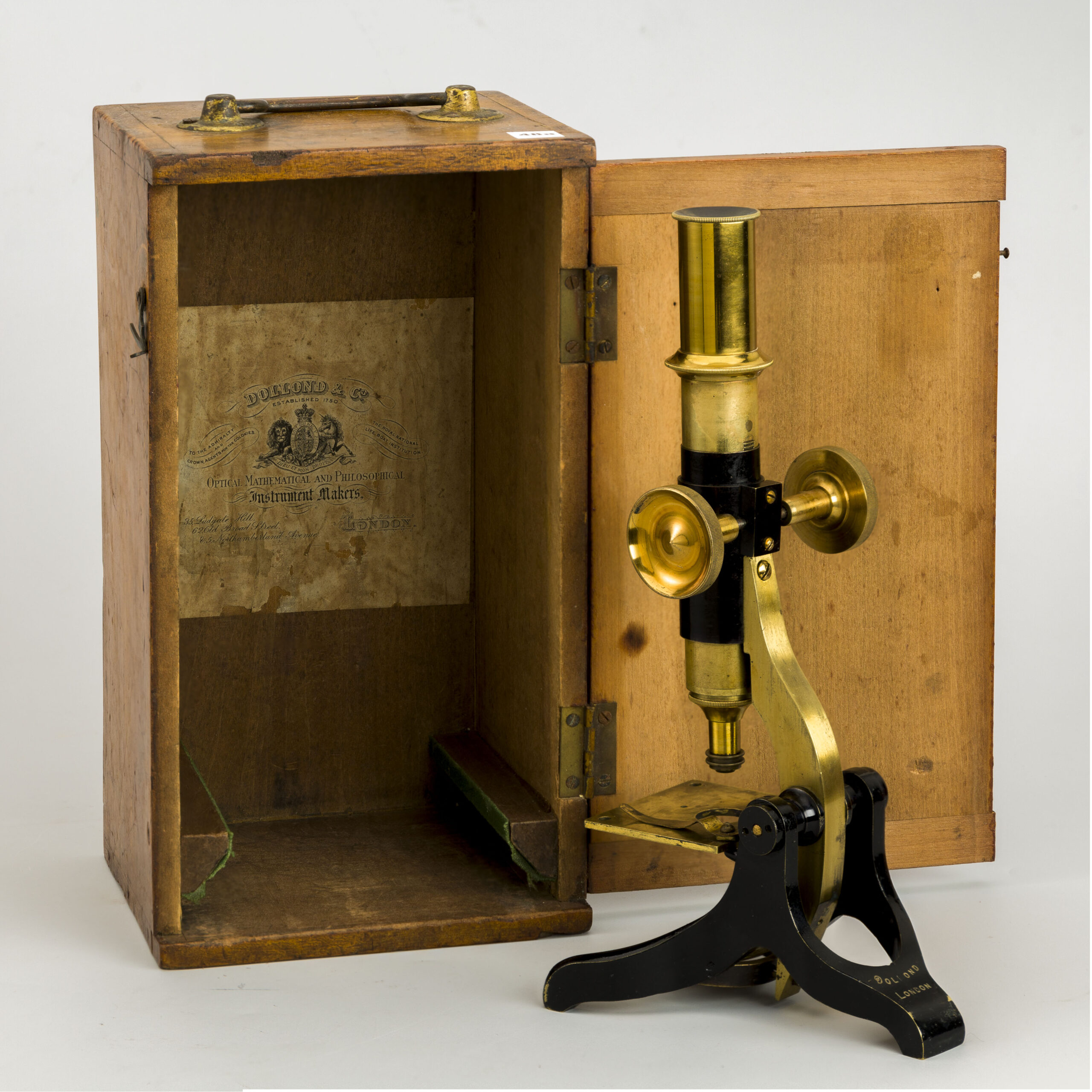
48a. Microscopio monocular. Dollond & Co. 1865.
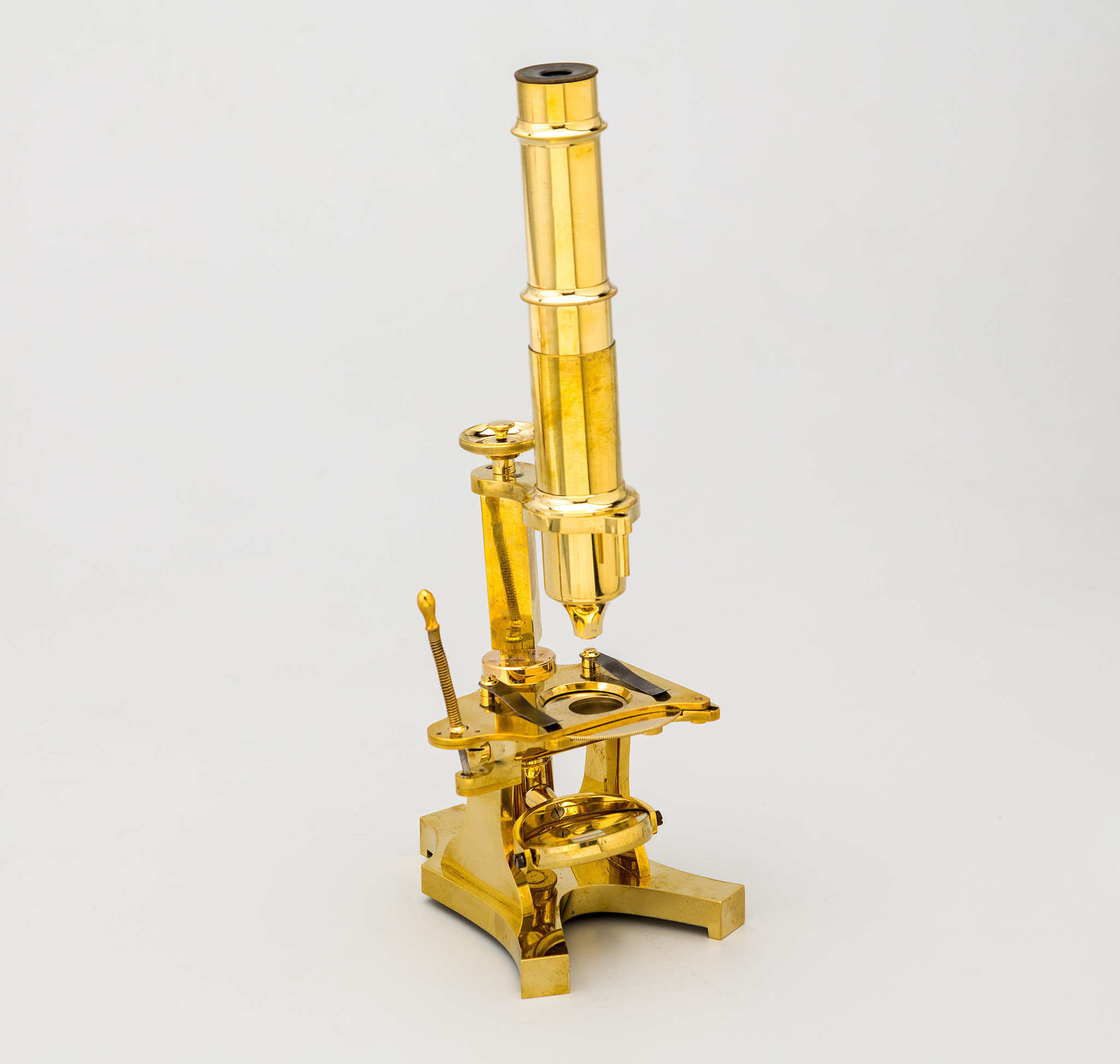
54. Gran microscopio monocular con sistema Varley. c.1850
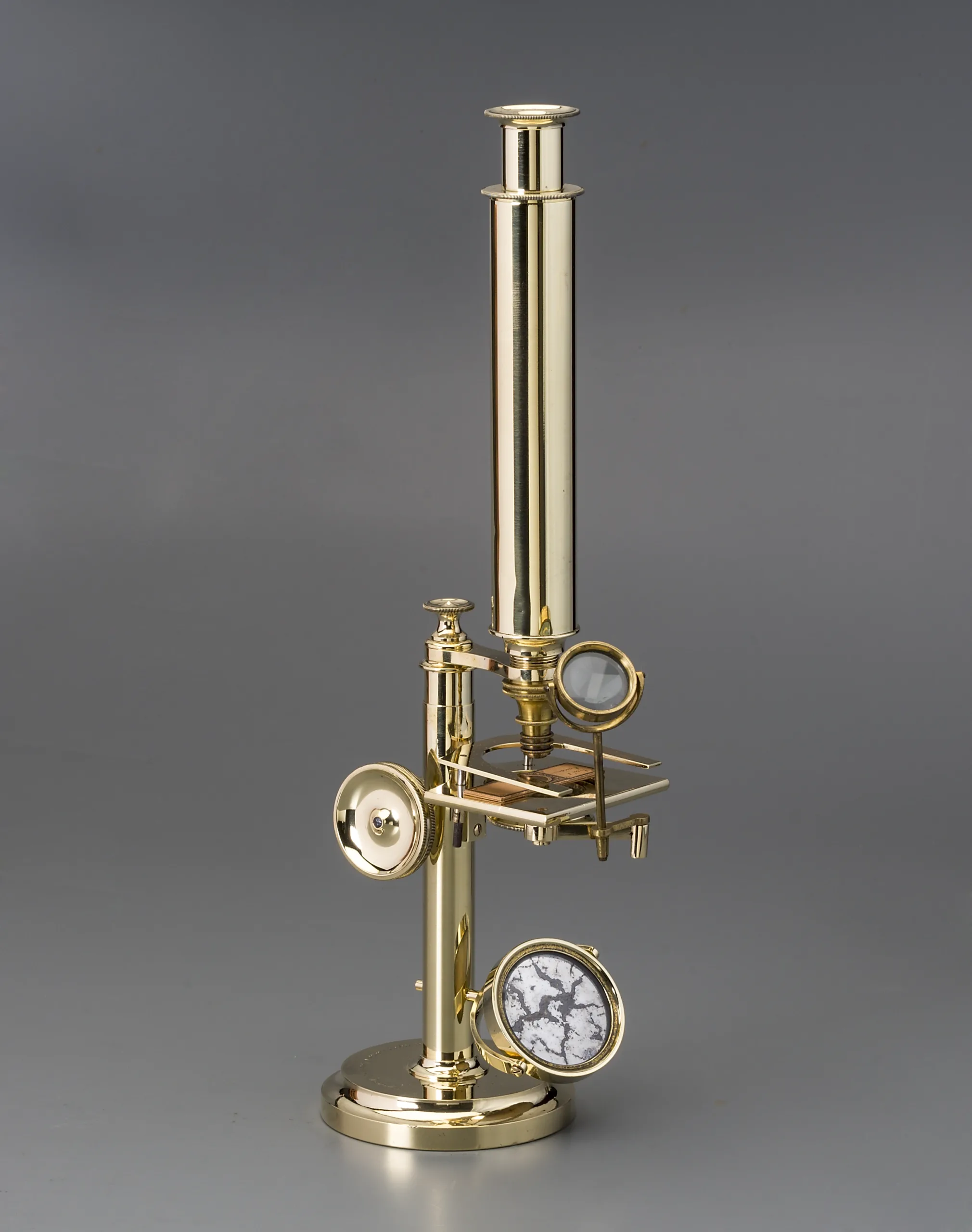
55a. Microscopio médico acromático. T&R. Willets. Londres. c.1844.
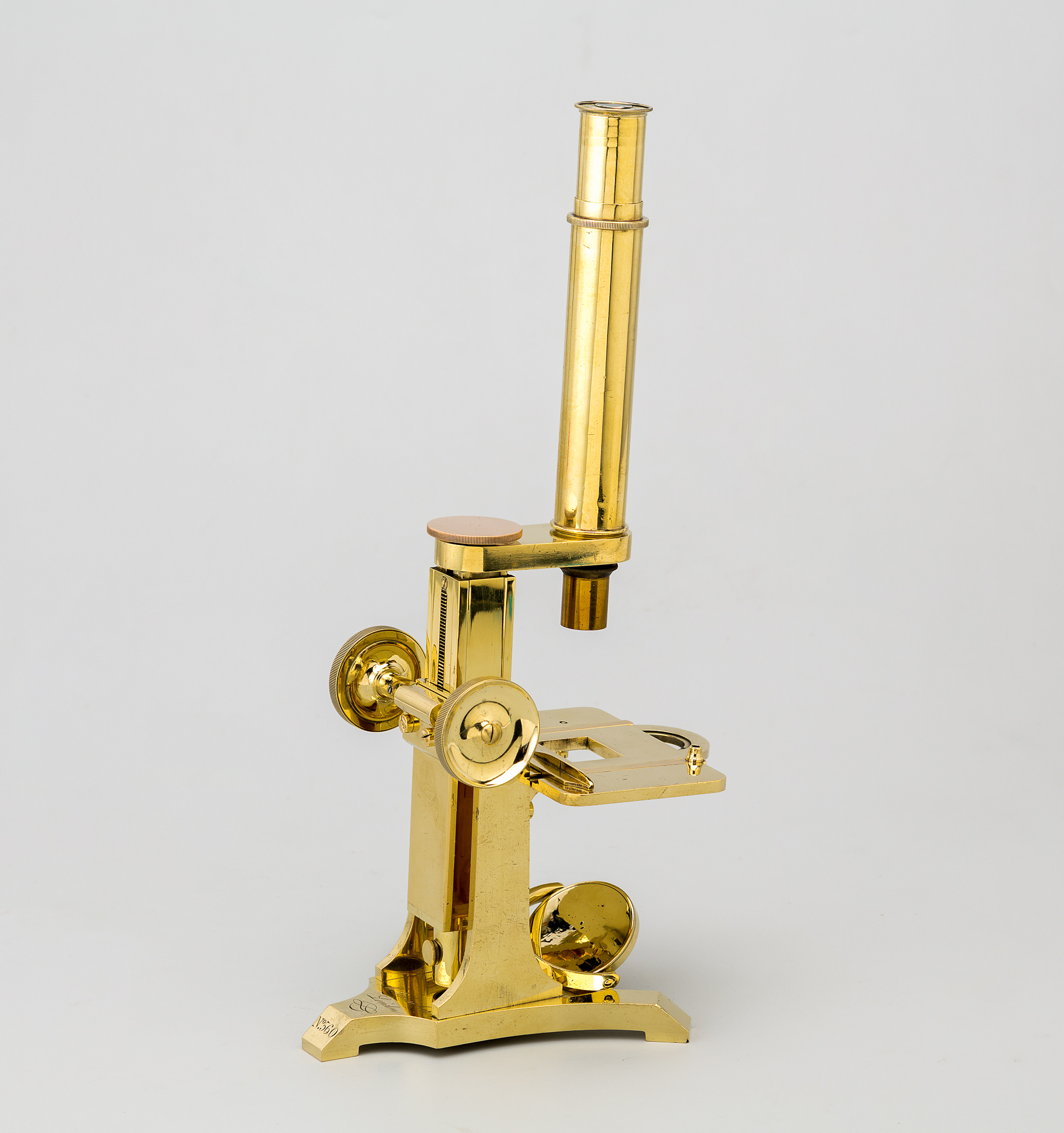
57. Microscopio monocular. M. Pillischer. c 1850. Londres
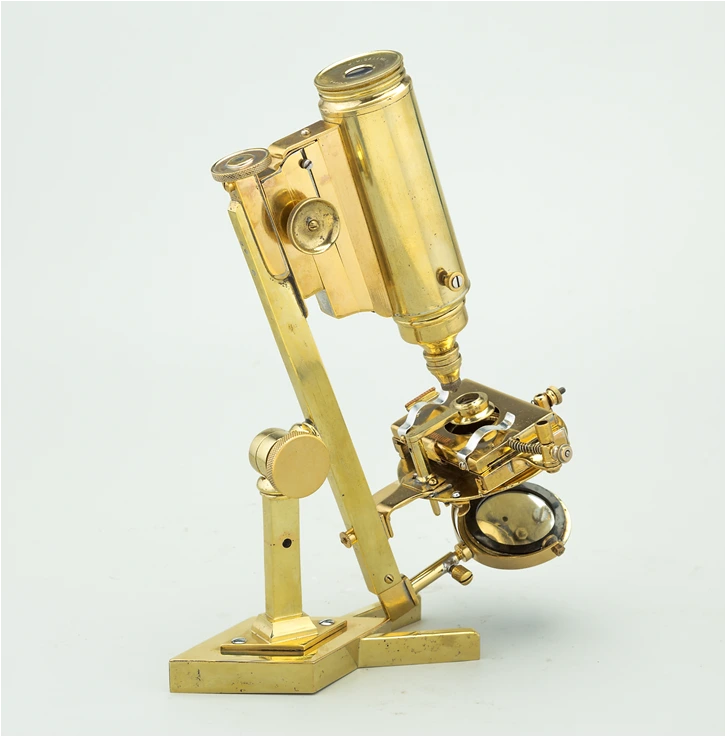
57a. Microscopio monocular. J.H. Dallmeyer. Londres.1858.
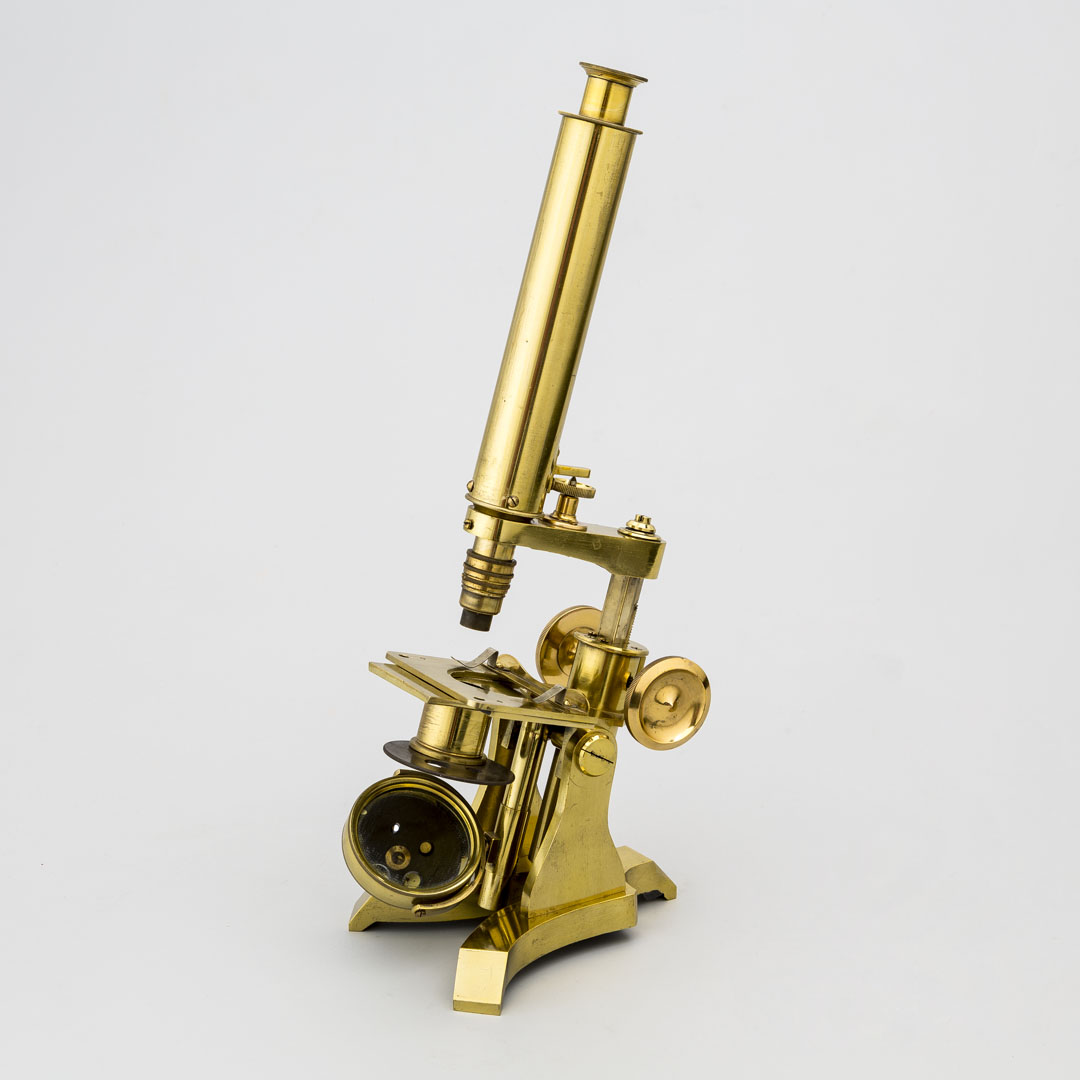
58. Gran microscopio monocular. Newton & Co. Londres.1840
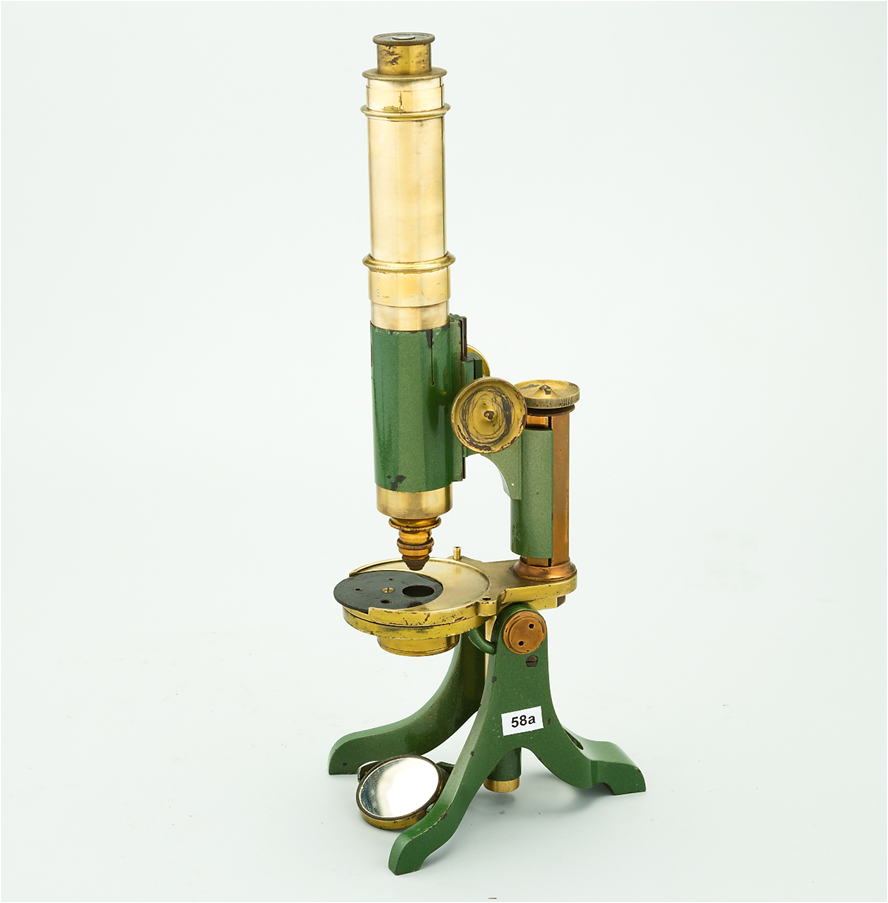
58a. Microscopio con platina reversible. Inglaterra. 1850.