Drum or barrel microscopes
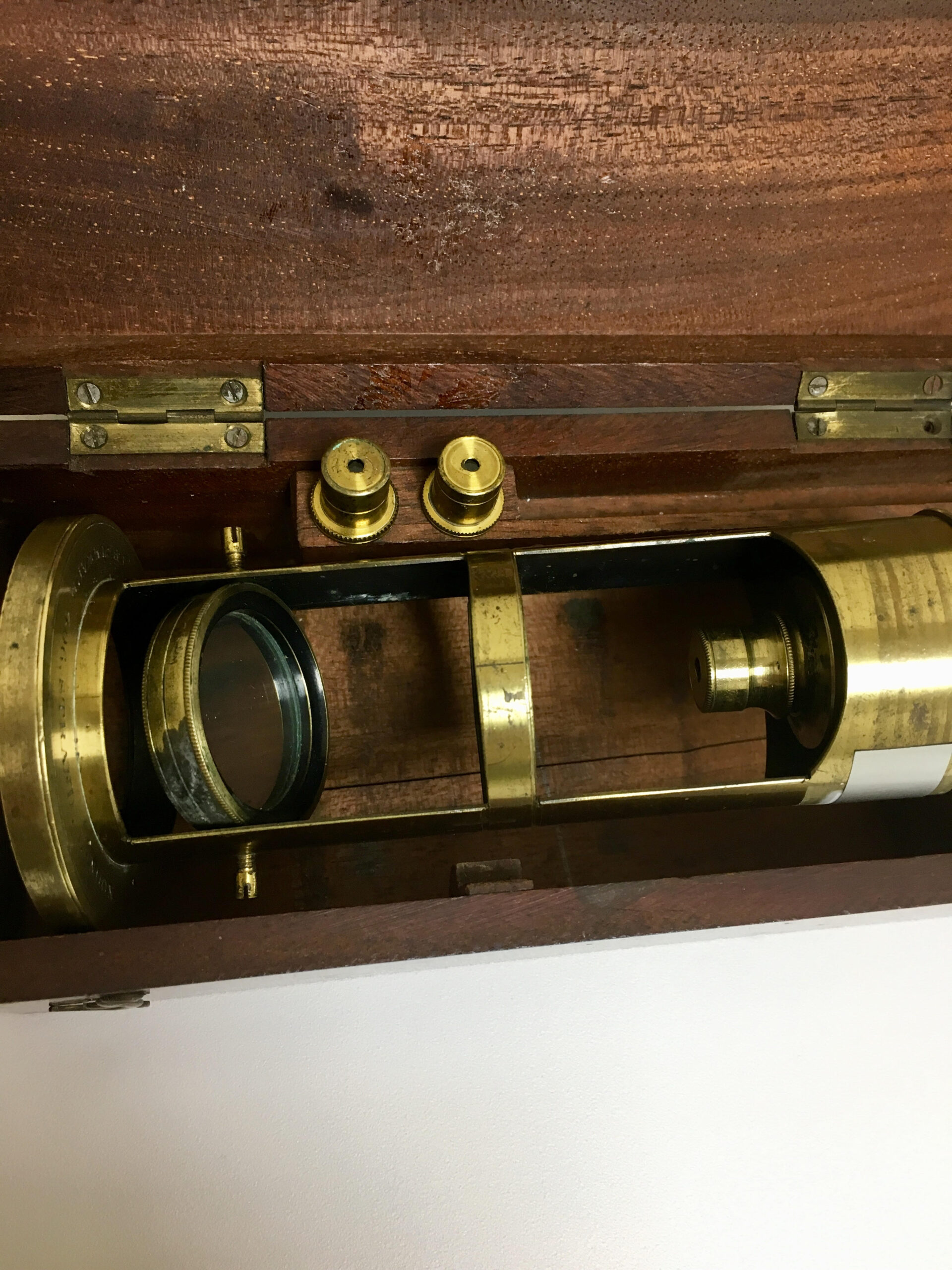
Adams and Martin around 1750 designed in England a curious model of a portable microscope enclosed in a tube. Drum or barrel microscopes as they were called have their origin in the words barrel (barrel) or drum (drum). The original model (No. 6 of the collection) was small, 15 cm high, and very simple (Fig. 1 and 2)
Figure 1. Diagram of a Nachet microscope model. Left: simple model. Right: model with mechanical focus and incident lighting.
Figure 2 Original design of the Fraunhofer 1811 microscope.
Later English models increased in size to 18 cm. (No. 7 and No. 8 of the collection). Finally, around 1800, the large English barrel model was developed, measuring 27 cm high (No. 41). Many are manufactured without a brand name and other manufacturers reach great perfection, such as Lennie, who manufactured the number 42 of the collection in Edinburgh in 1857. What is common to all variants of the English drum model is that it is a vertical tube, unstable and with practically the same diameter at the top and bottom. The platen is inside the tube. (Fig. 3)
This English model will be perfected on the European continent, especially by Oberhaüser and Nachet (models from the collection No. 37, No. 38 and No. 39) as well as in Germany by Fraumhofer and by Schieck father and son (No. 52i, from the collection). George Oberhauser (1798-1868) developed a microscope with a very heavy stand (foot) filled with lead, which gave it great stability compared to the English model. This model was called «continental» by the English (Fig. 4).
Figure 3. Evolved Nachet model.
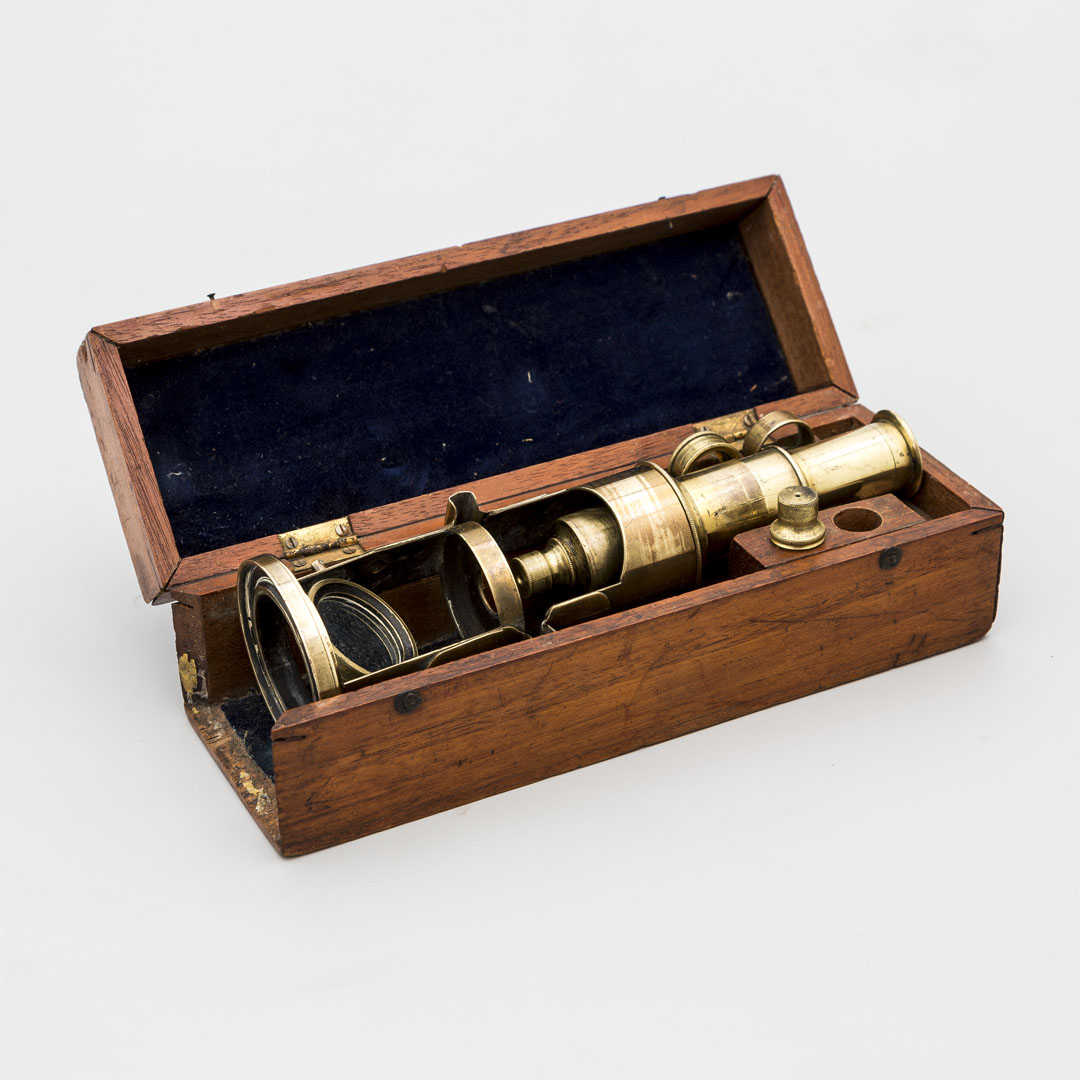
37. Microscopio de barril sencillo
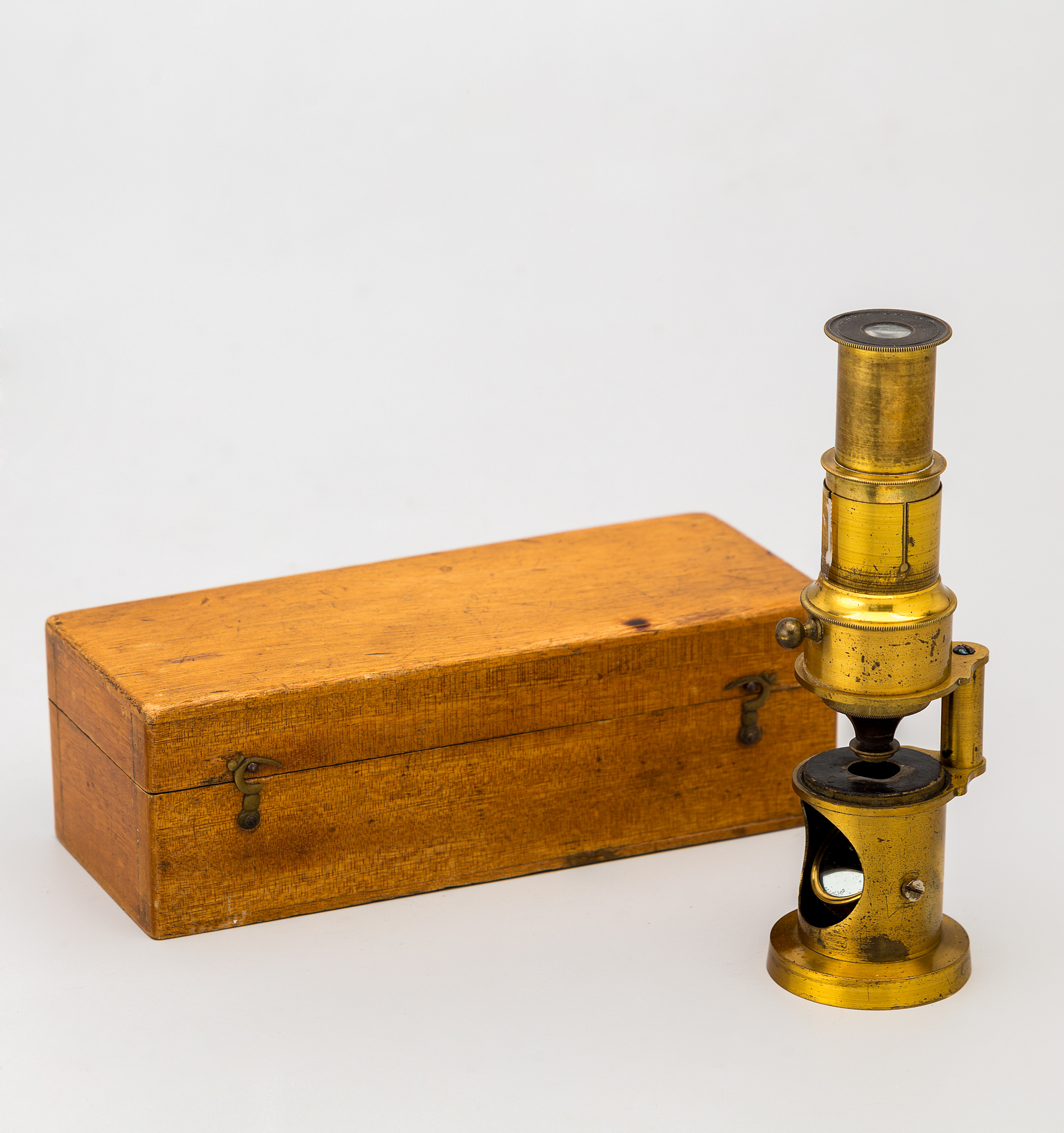
38. Microscopio de barril compuesto. 1835
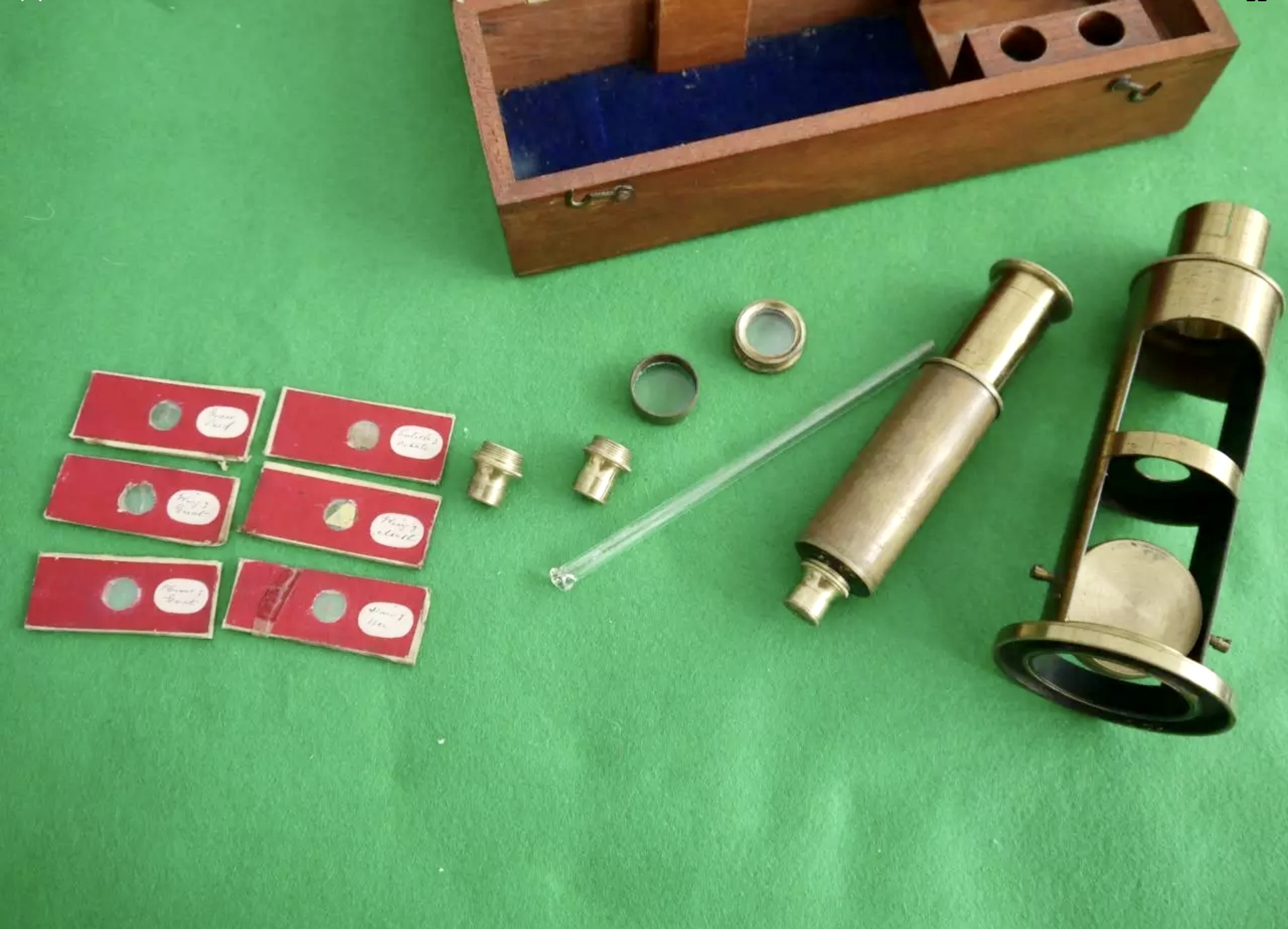
39. Microscopio de barril. J.H. Steward. Londres.1857
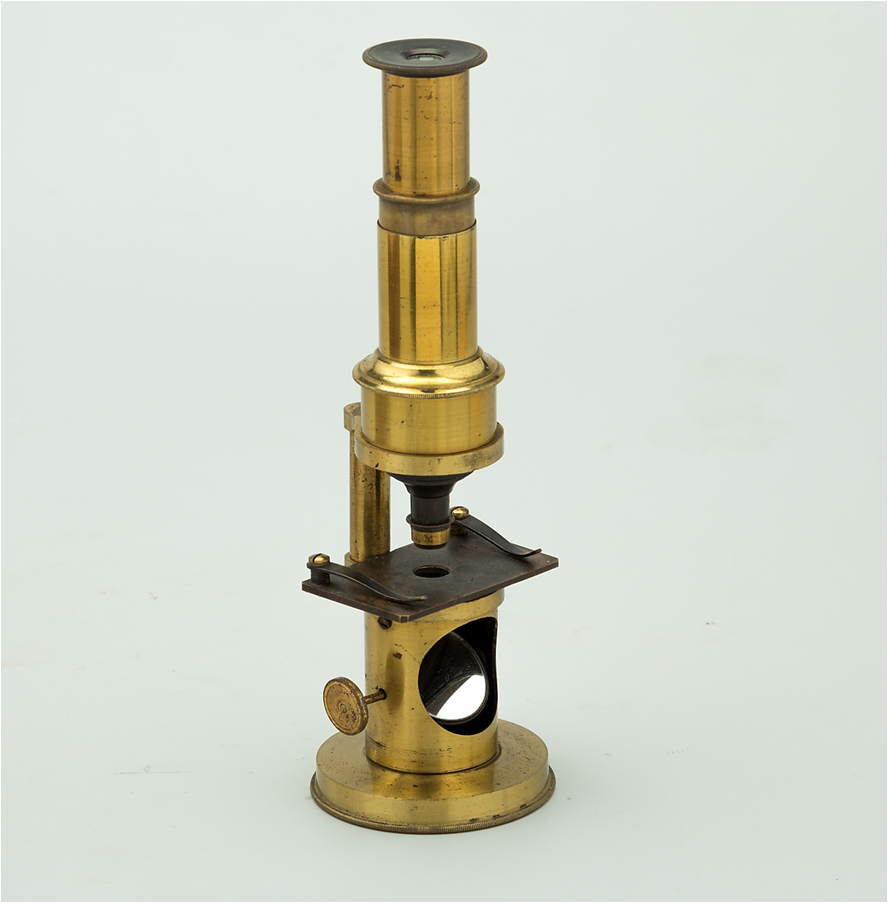
39a. Microscopio de tambor con brazo exterior.
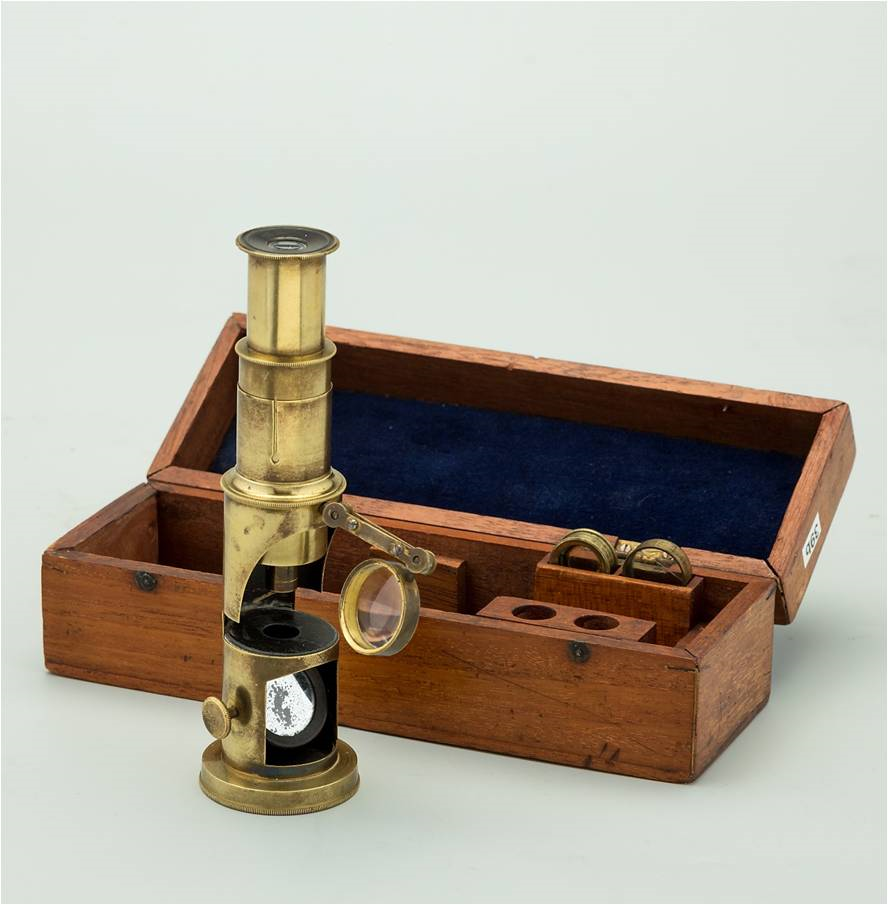
39b. Microscopio de tambor J. L. Amadío. Londres .1854.
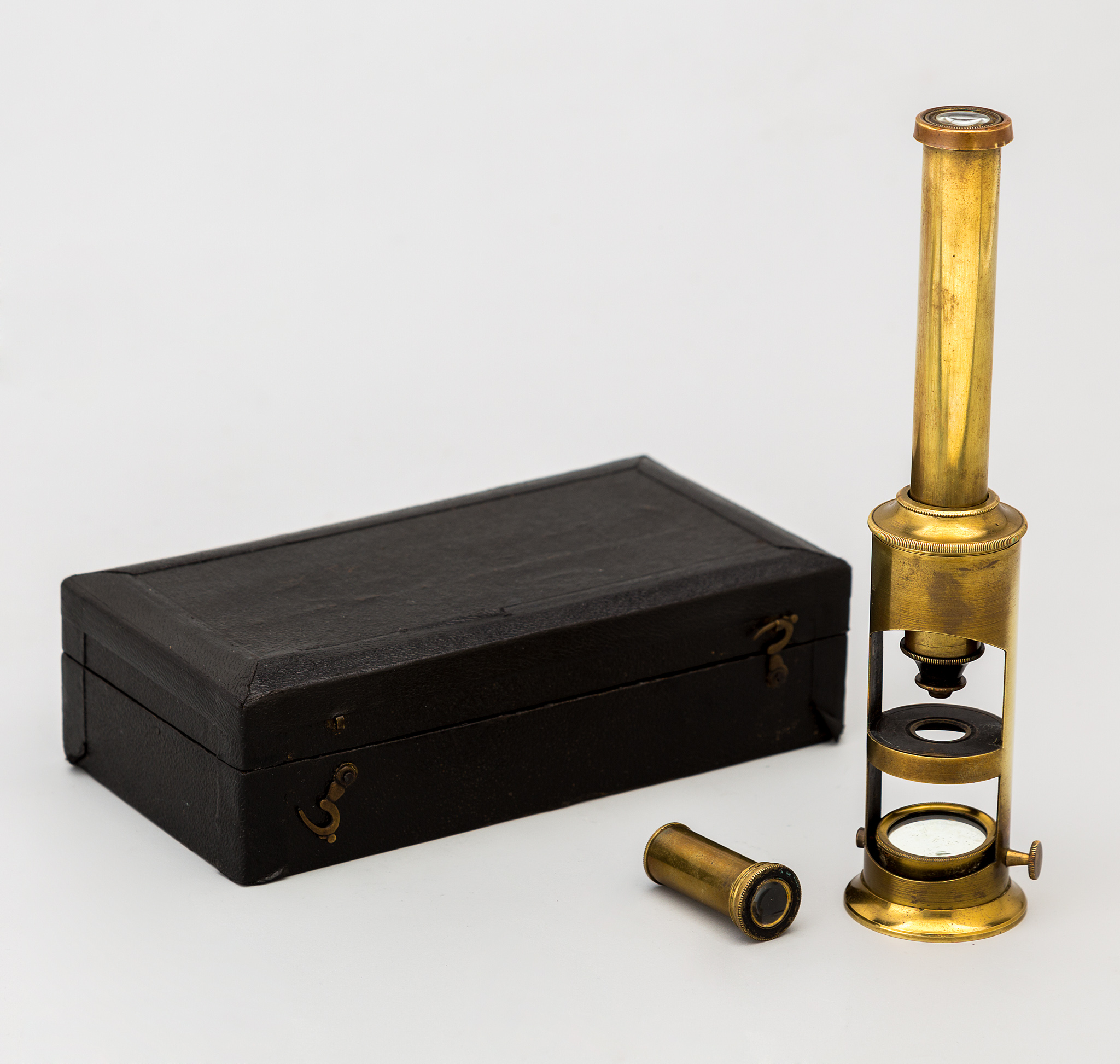
40. Microscopio de barril simple. 1880
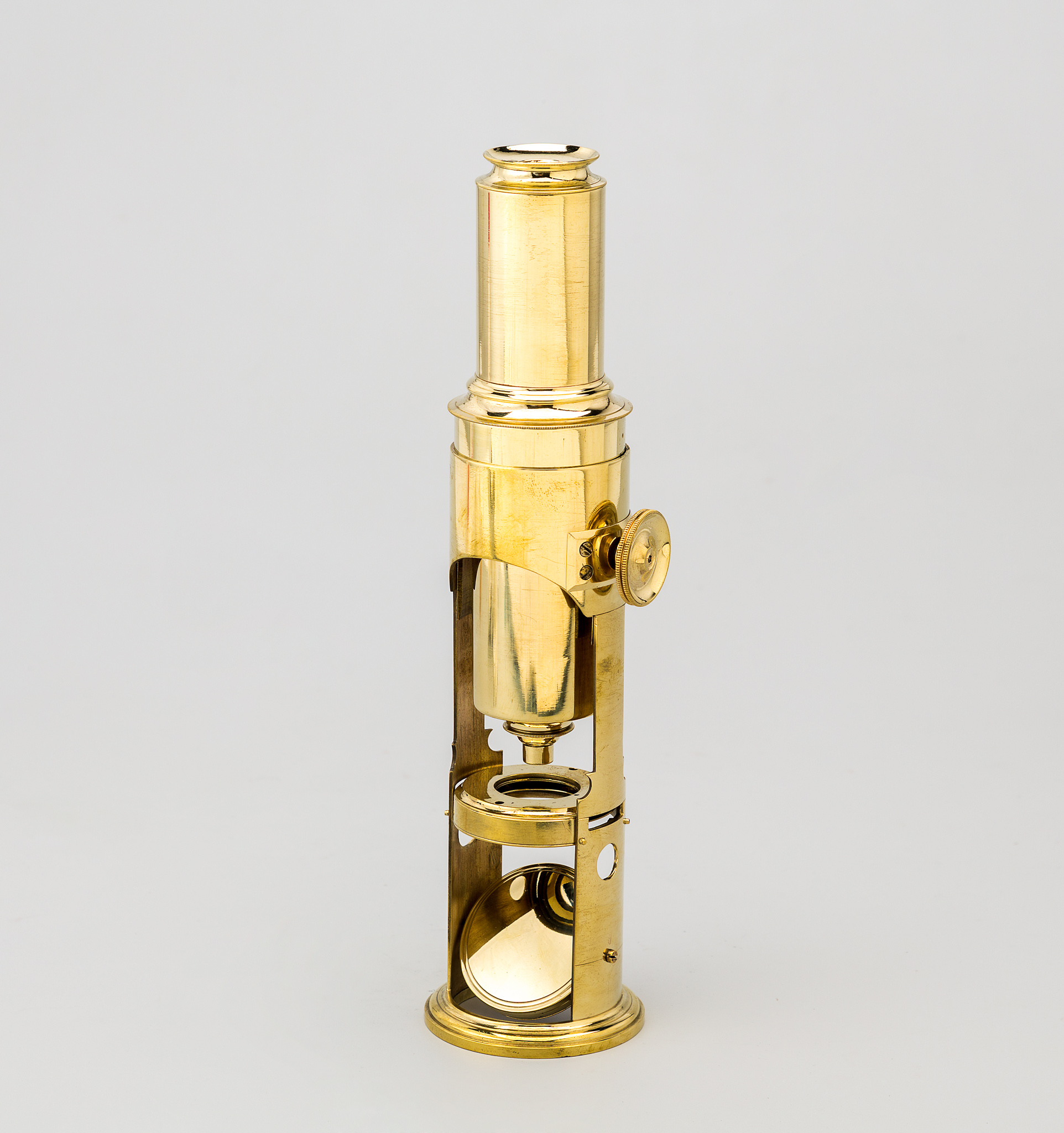
41. Gran microscopio compuesto de barril. 1800
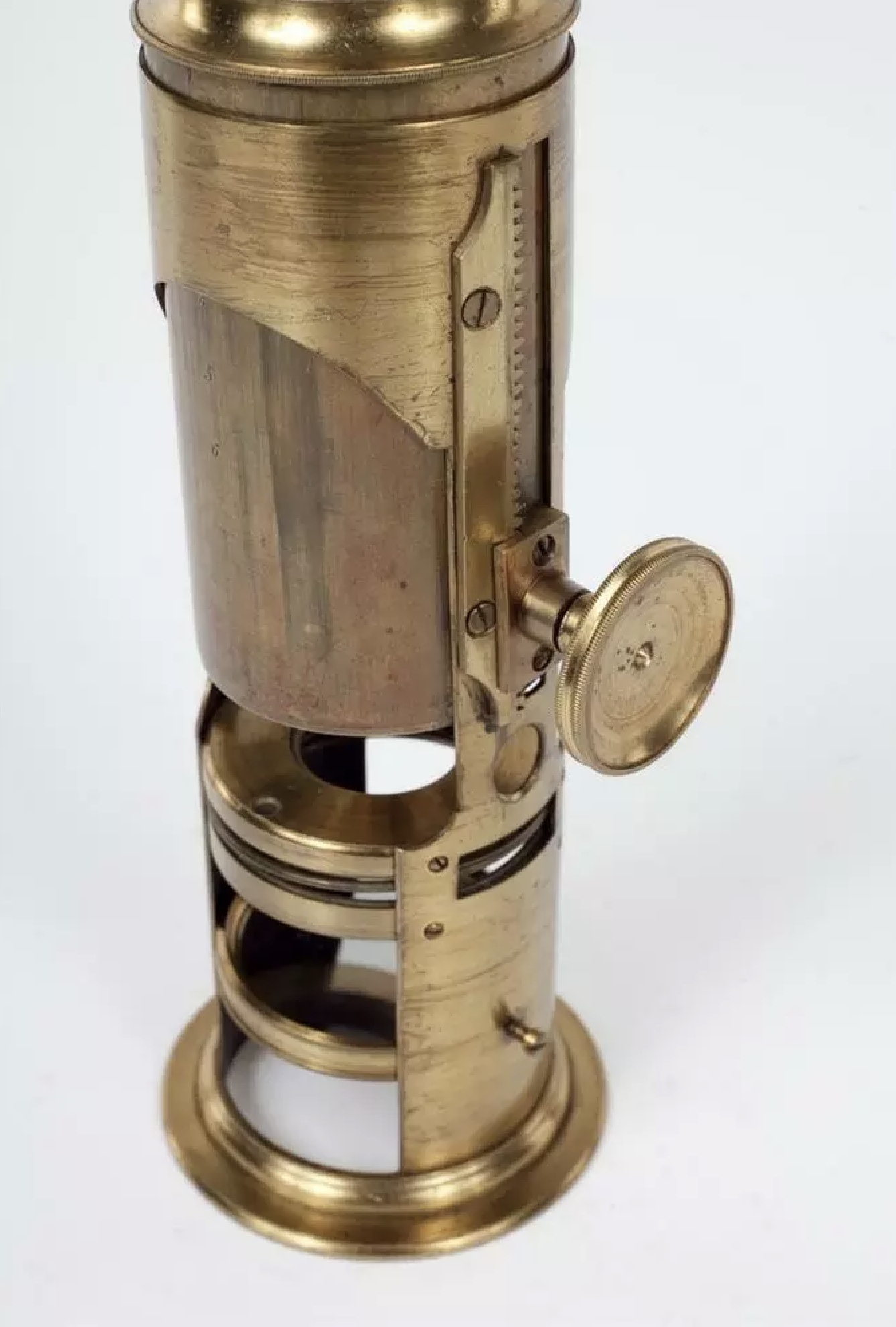
42. Microscopio de barril (drum). Lennie. Edimburgo. c.1857
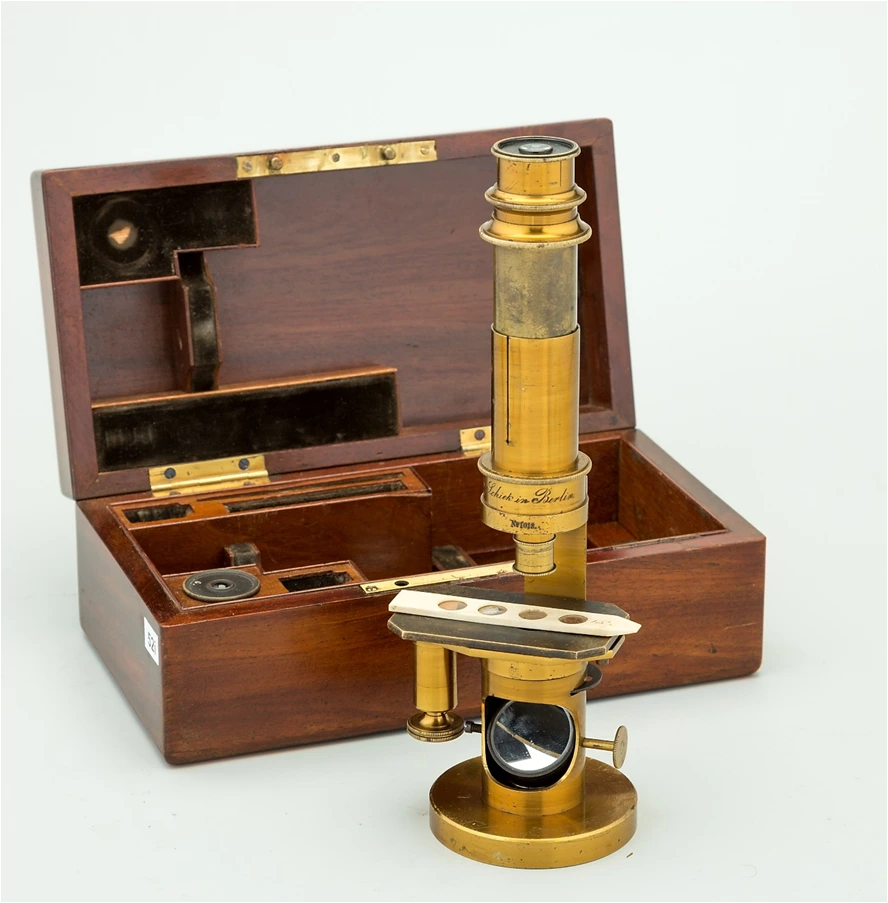
51k. Microscopio de barril. F.W. Schiek. Berlin. 1859.
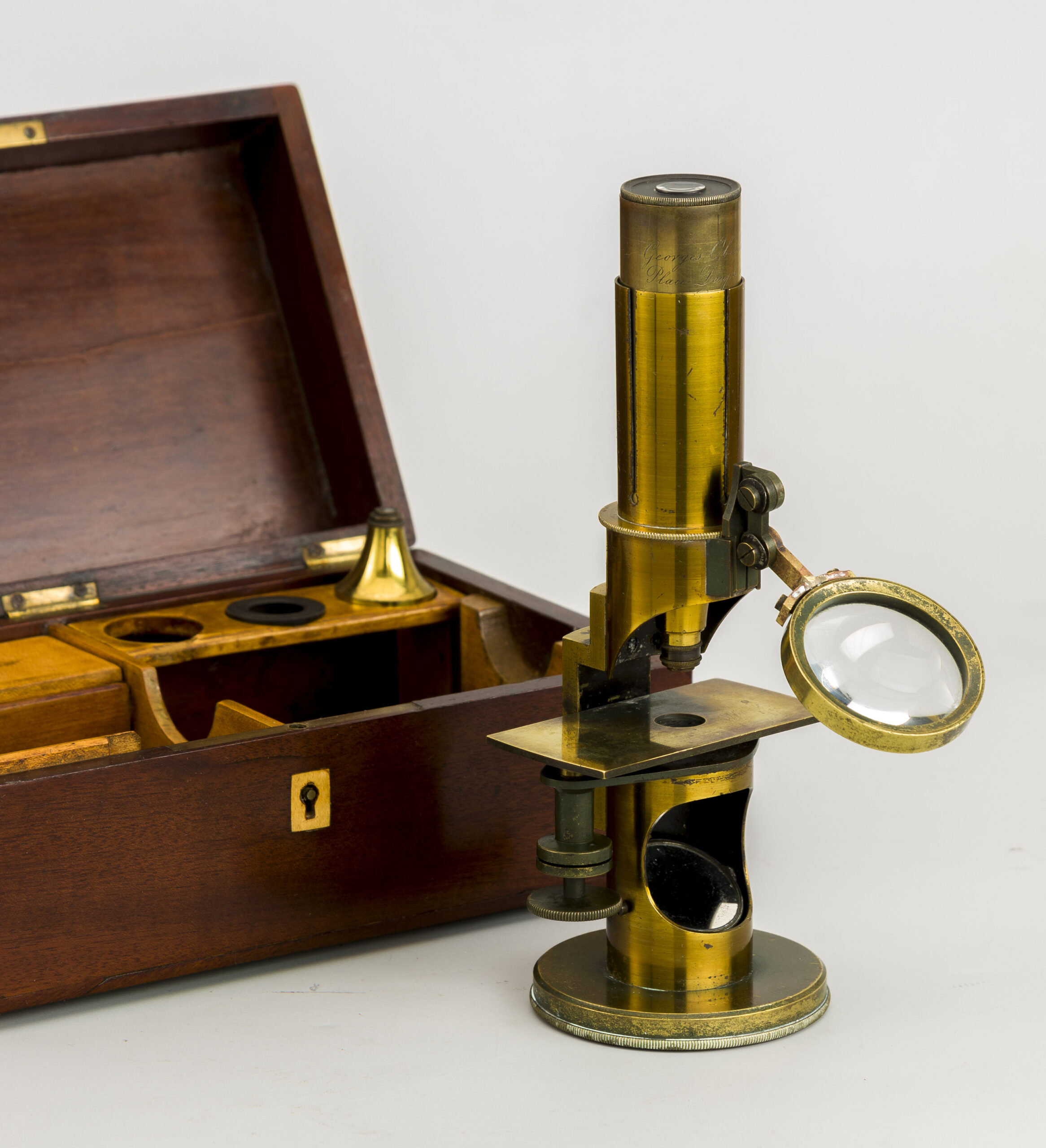
52. Microscopio de barril compuesto. George Oberhauser. Paris. 1835
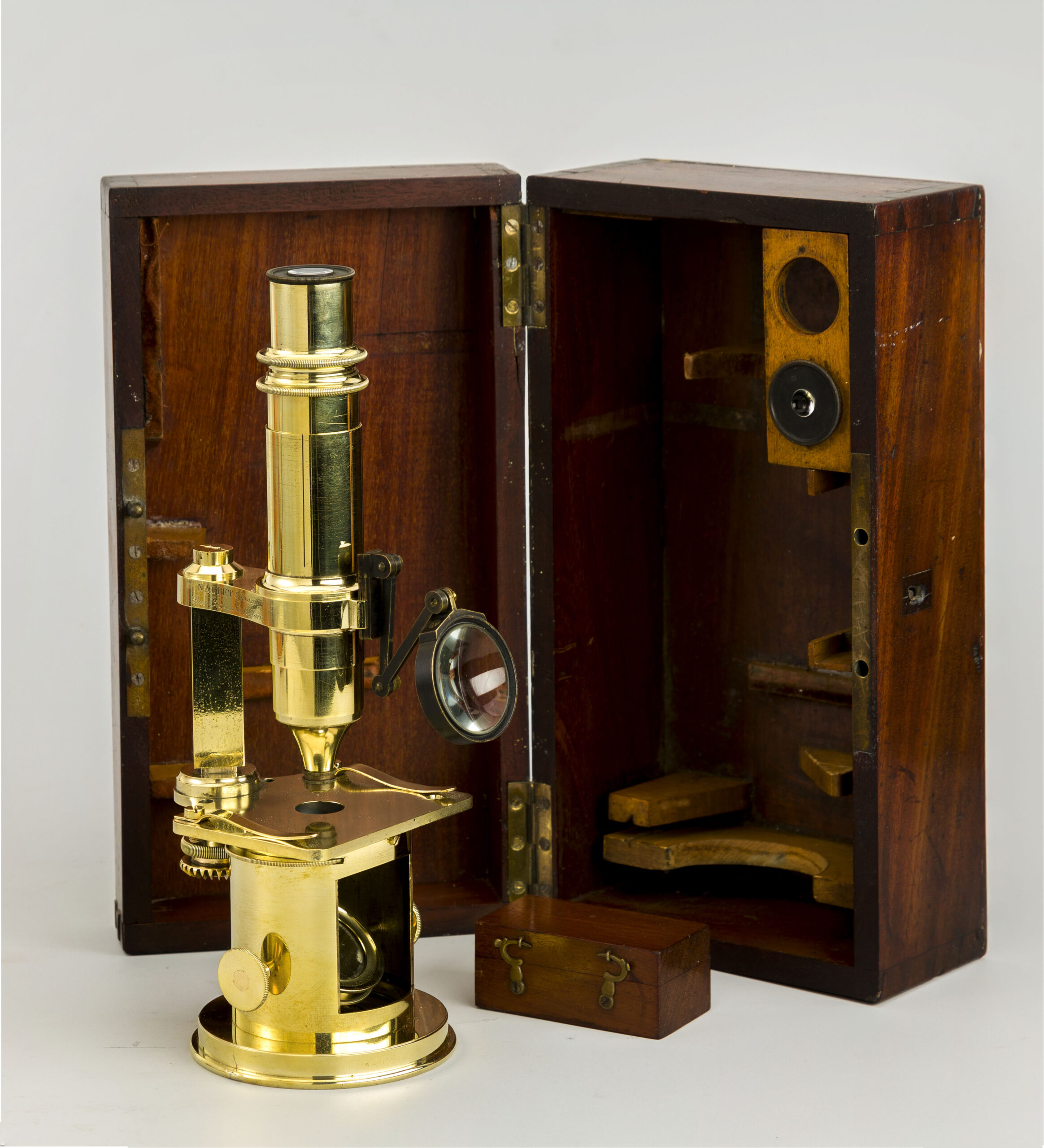
52c. Microscopio de tambor. C. Nachet. c.1850
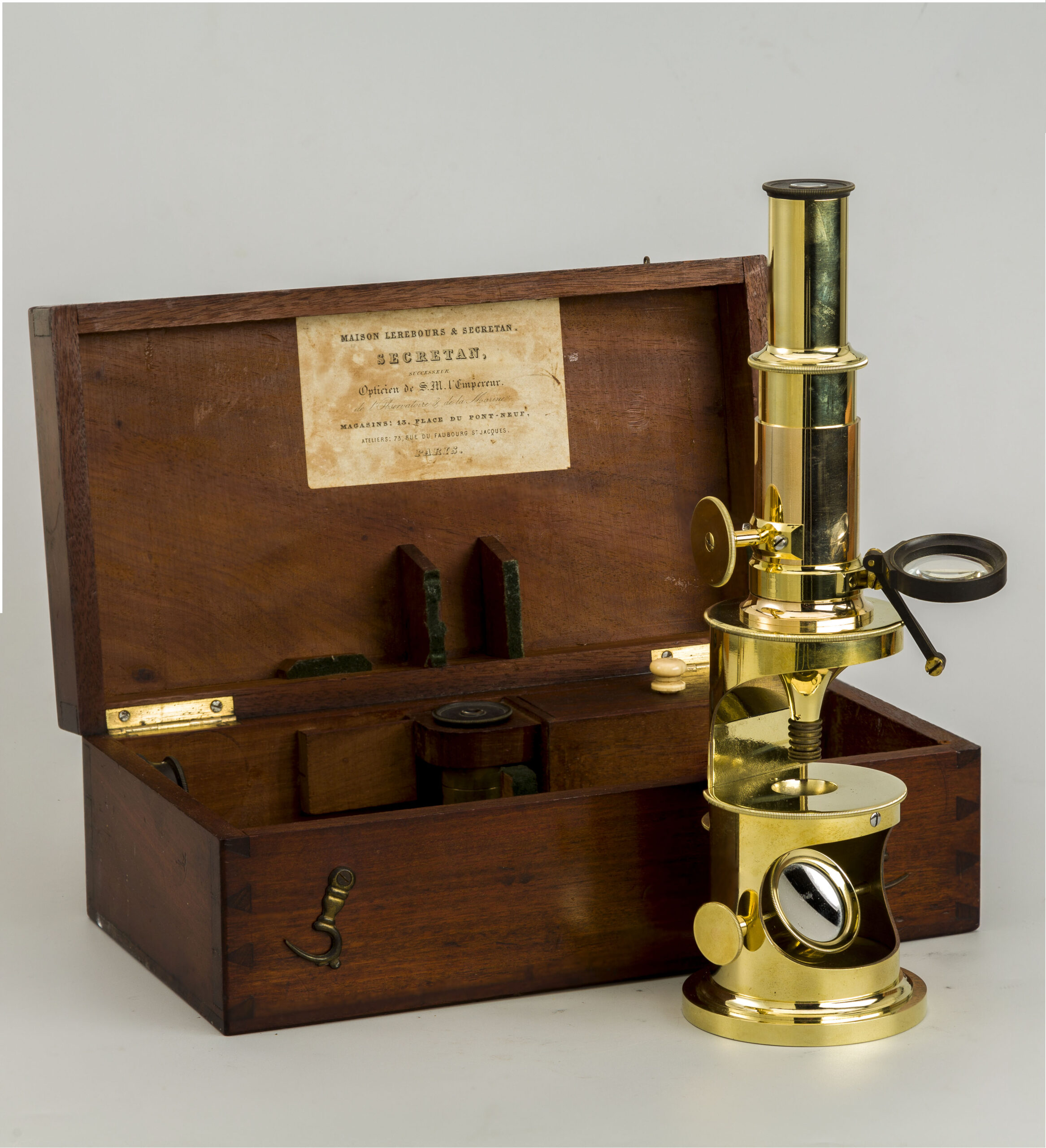
52e. Microscopio de barril. Lerebours & Secrétan. Paris. c. 1840
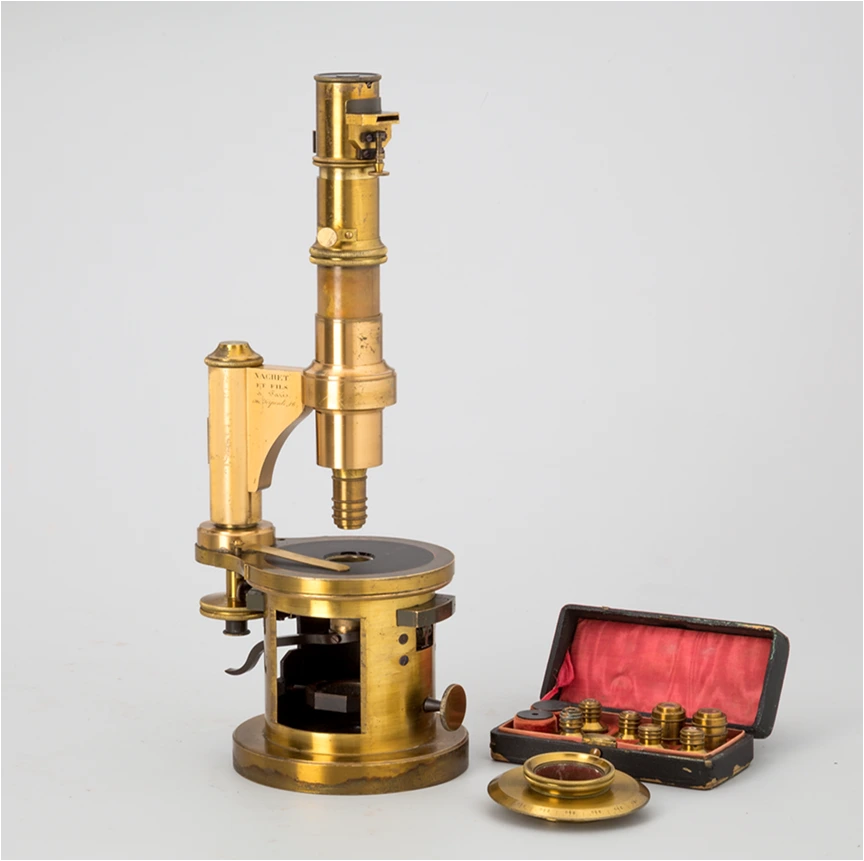
52i. Gran microscopio de tambor “a niche”. C. Nachet. Paris. 1860.
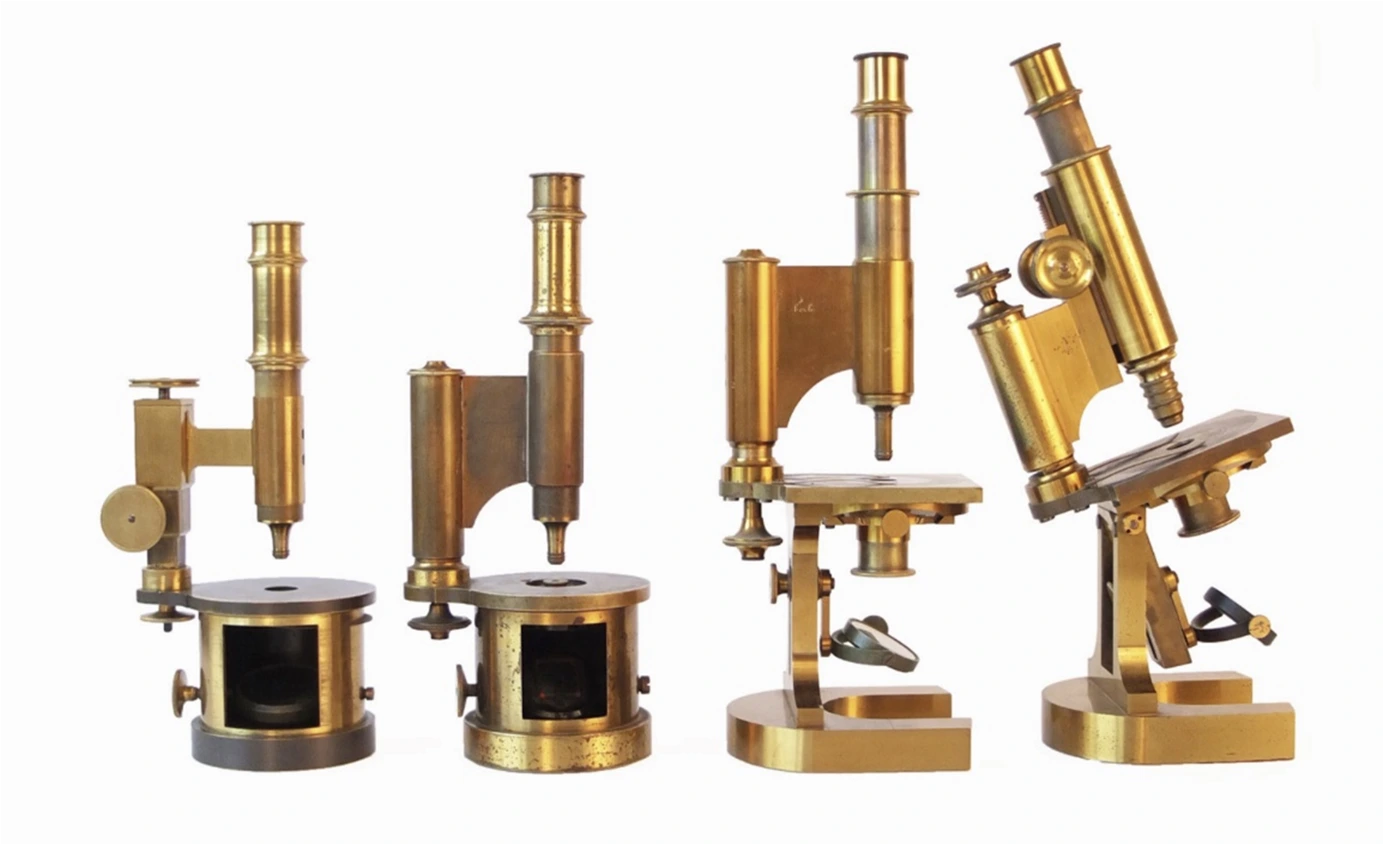
52t. Microscopio “Grand Model”. Nachet et fils. Paris c.1865.
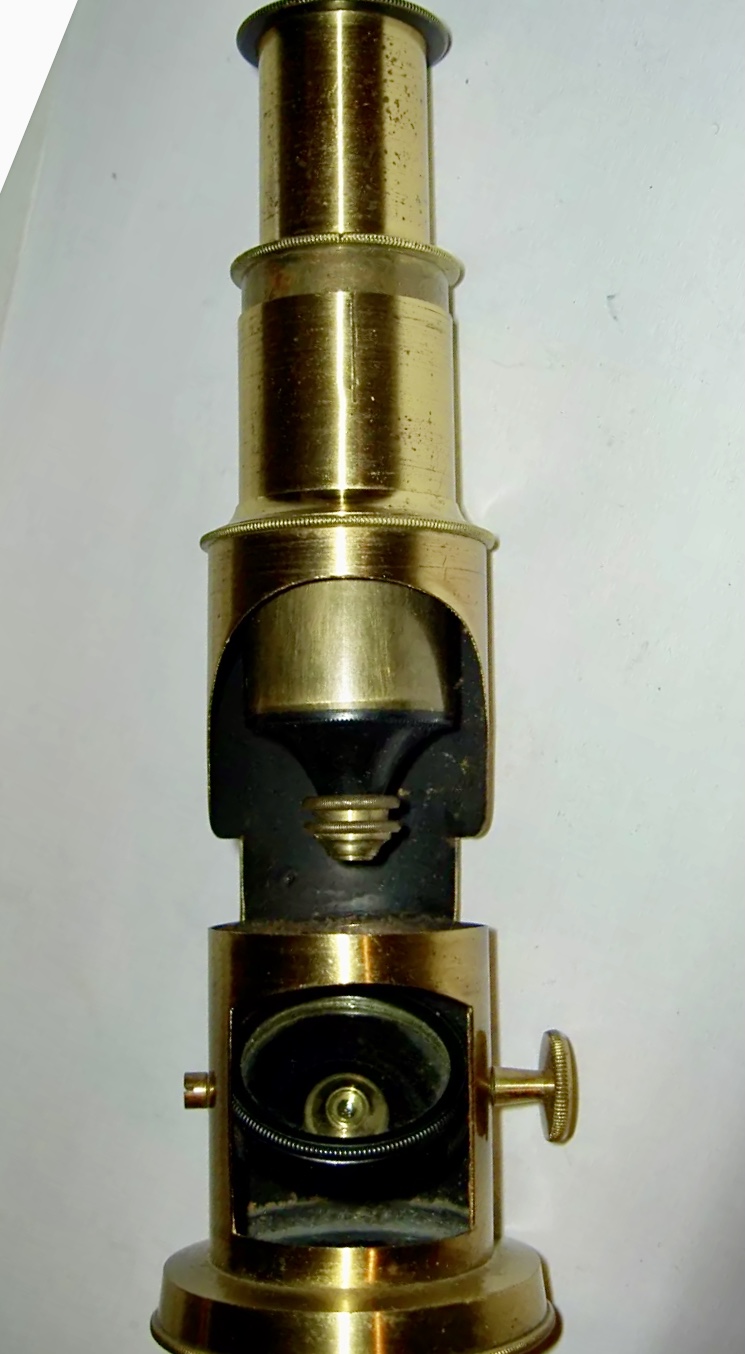
6. Microscopio de barril (barrel) o sistema de tambor (Drum). Fabricante desconocido
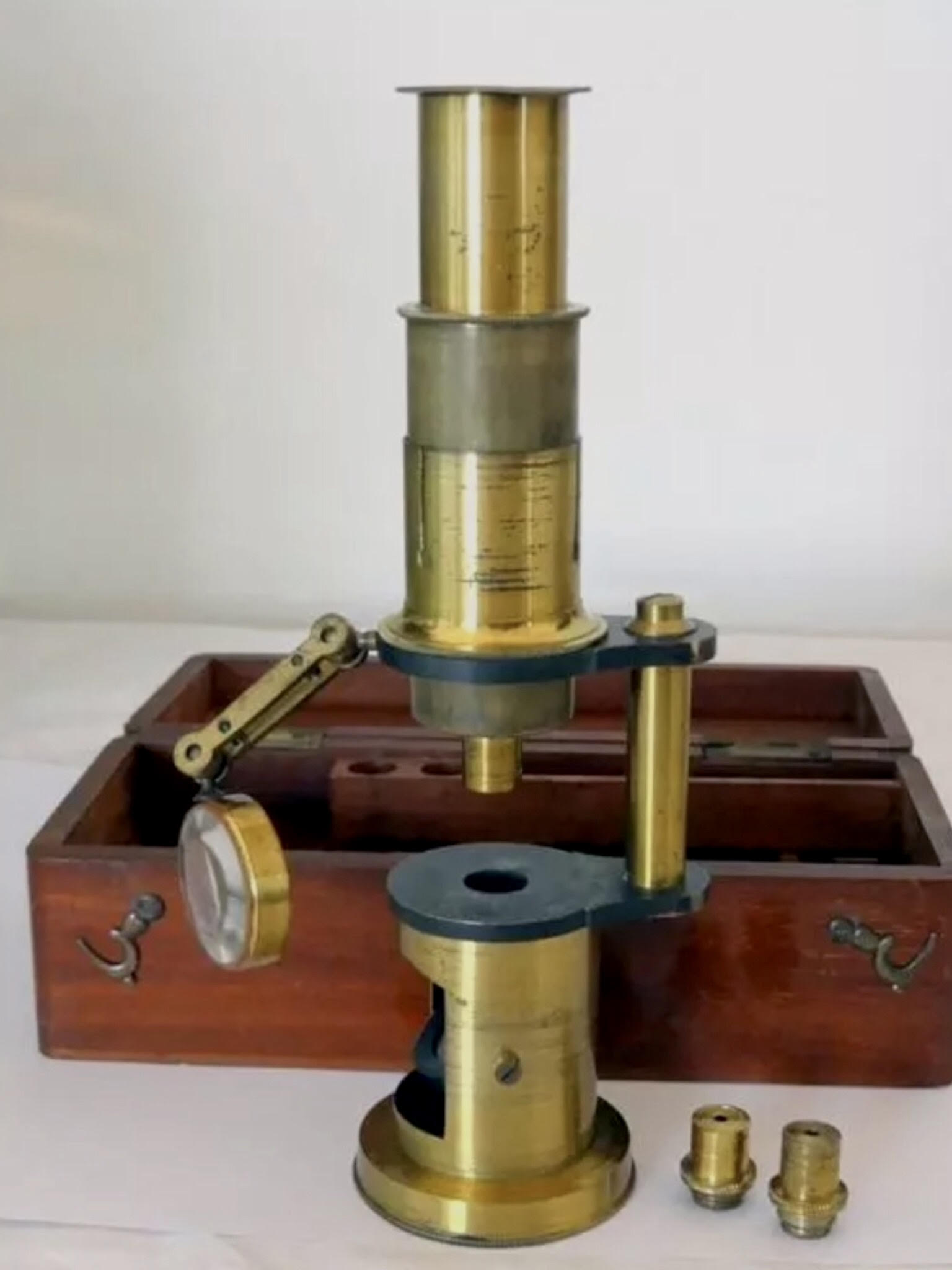
7. Microscopio de barril. Fabricante desconocido. 1850.